
Finding Your Guide: What to Look for in a Psychedelic Facilitator with Jessalyn Maguire & Denise Rue
This week at District216, we welcomed Jessalyn Maguire, LMSW, and Denise Rue, LCSW, for an essential and timely conversation about how to choose a psychedelic facilitator in an increasingly crowded and confusing landscape.
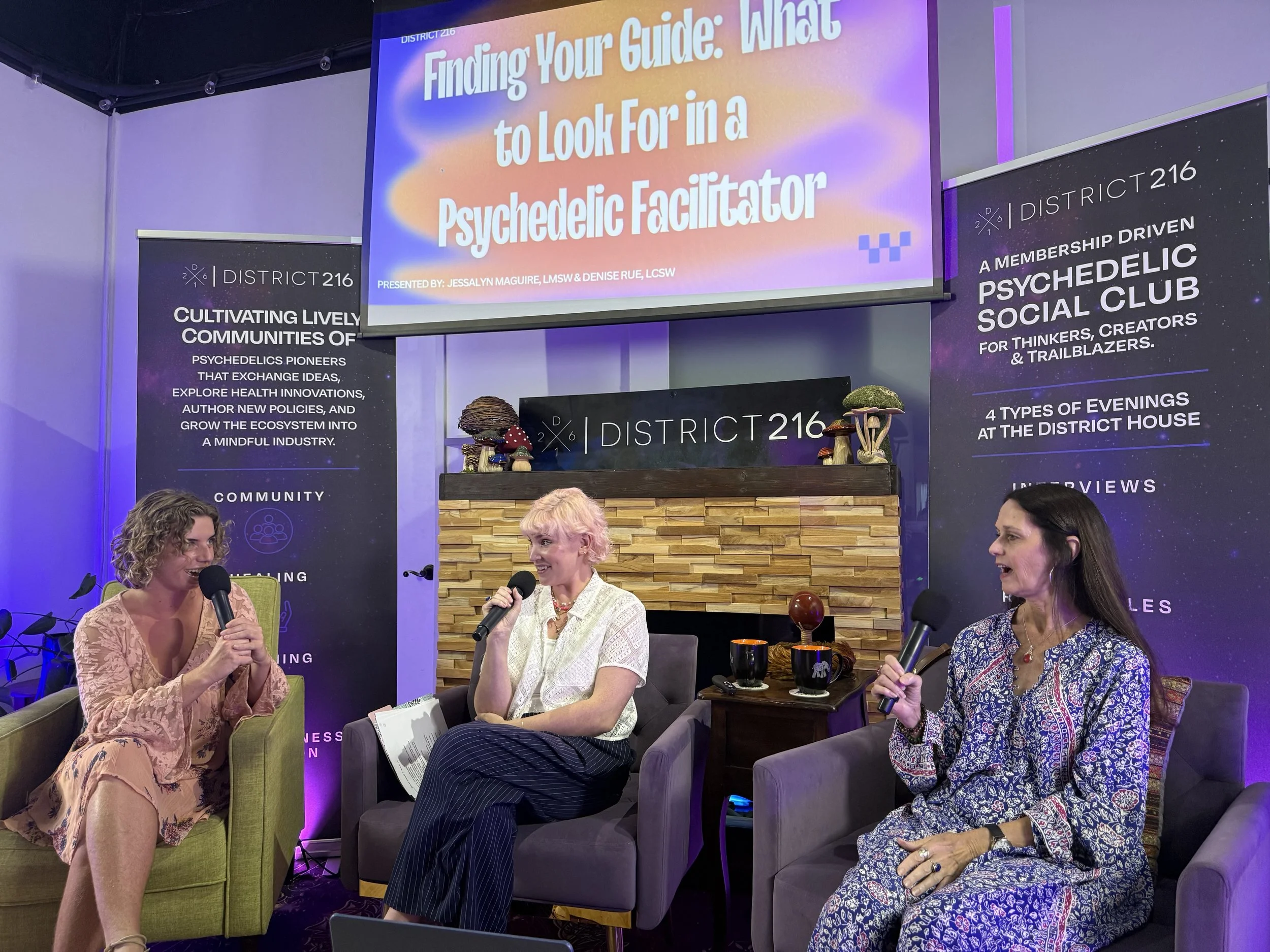
With facilitator trainings on the rise and more people becoming “certified,” many in our community are asking deeper questions: What does that certification really mean? How do you know if someone can safely hold space for your experience? And what qualities matter beyond a resume or website?
These questions shaped Finding Your Guide: What to Look for in a Psychedelic Facilitator, a thoughtful, grounded discussion hosted by Hannah Jo, whose steady presence and well-placed questions helped guide the evening with care, curiosity, and nuance.
Rather than offering a simple checklist, the conversation invited us to slow down and look beneath the surface. Together, we explored:
Why certification alone does not equal readiness or safety
The importance of embodied presence over performative expertise
How consent, power dynamics, and relational repair show up in psychedelic spaces
What it truly means to co-create a healing container
How intuition, discernment, and education work together when choosing a guide
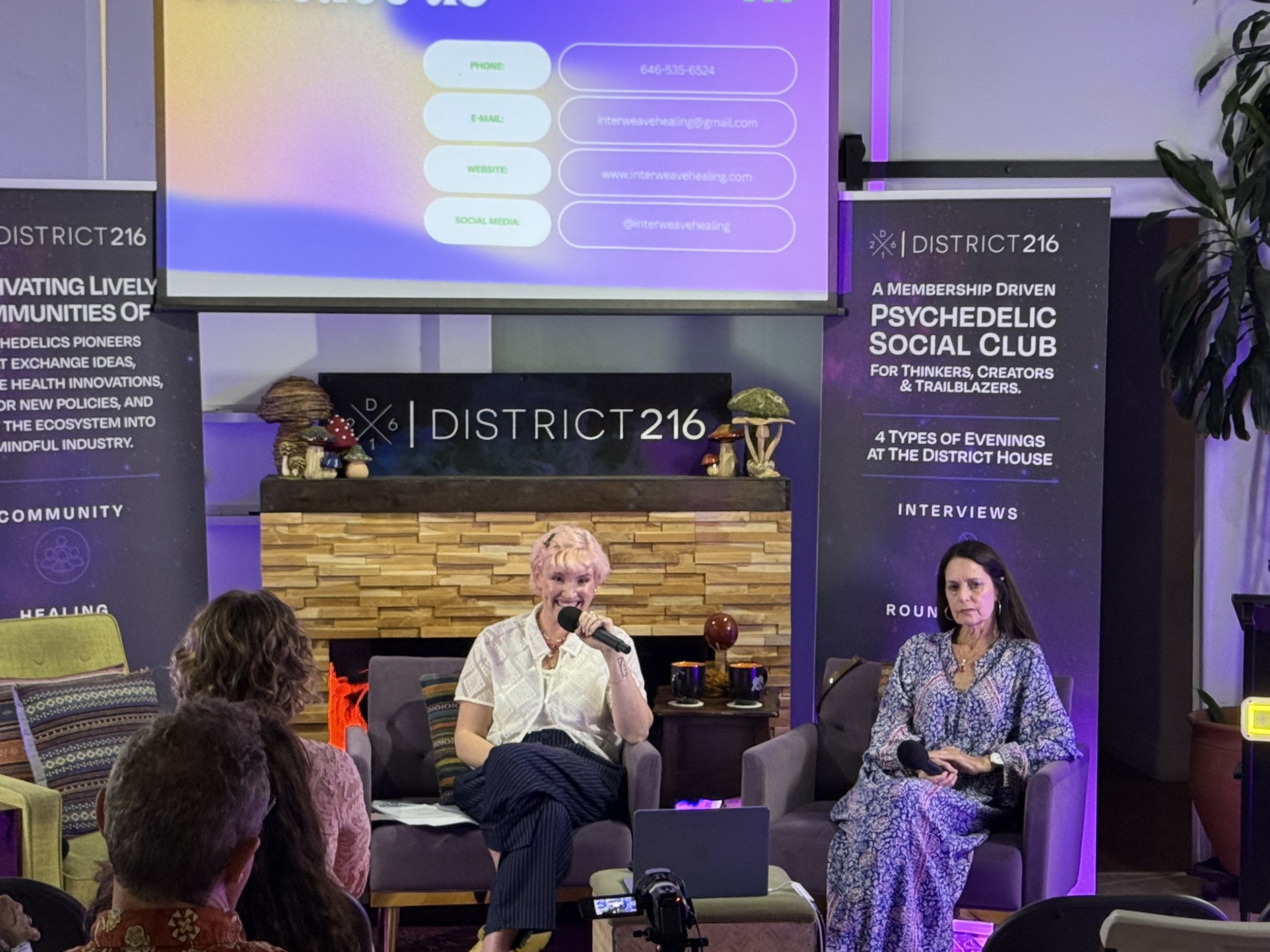
A core theme emerged again and again: choosing a facilitator isn’t about finding the best guide—it’s about finding the right guide for you, your nervous system, and your intentions.
Jessalyn shared from the intersection of social work, somatics, creative expression, and collective liberation—speaking to healing as non-linear, relational, and deeply human. Their reflections emphasized sovereignty, consent, and the importance of a facilitator’s self-awareness, values, and capacity for repair.
Denise brought the grounded perspective of a clinician and retreat leader who has overseen more than 1,500 psilocybin sessions and countless integration circles. She spoke candidly about responsibility, boundaries, and the profound trust practitioners are given when people bring their most vulnerable inner material into a psychedelic space.
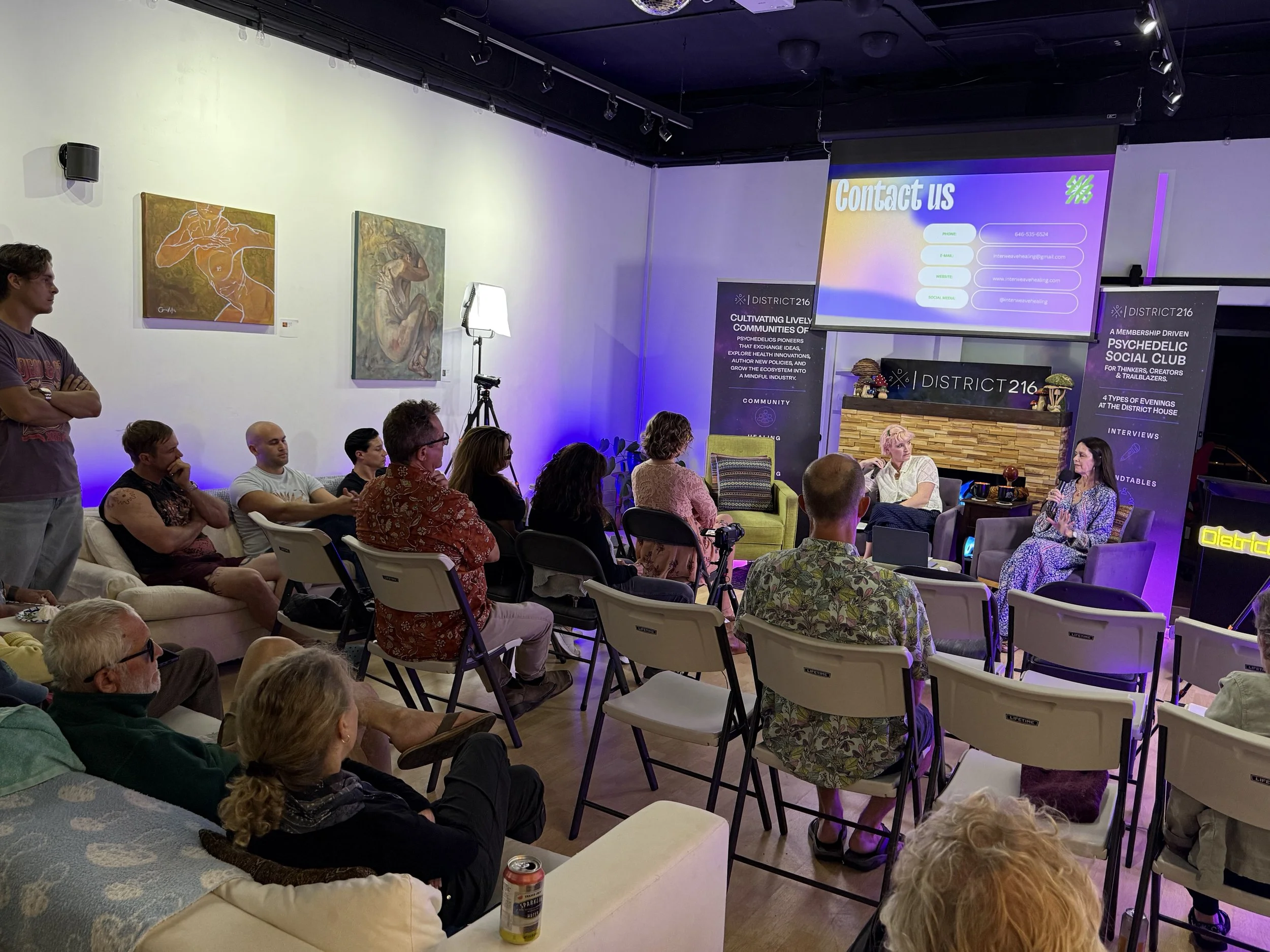
What stood out most about this evening wasn’t just the depth of expertise—it was the tone. There was no hierarchy, no guru energy, and no shortcuts. Instead, there was humility, accountability, and a shared respect for the weight of this work.
As psychedelics continue to move into broader cultural conversation, gatherings like this serve as important anchors—reminding us that healing is relational, safety is foundational, and the relationship itself is often the medicine.
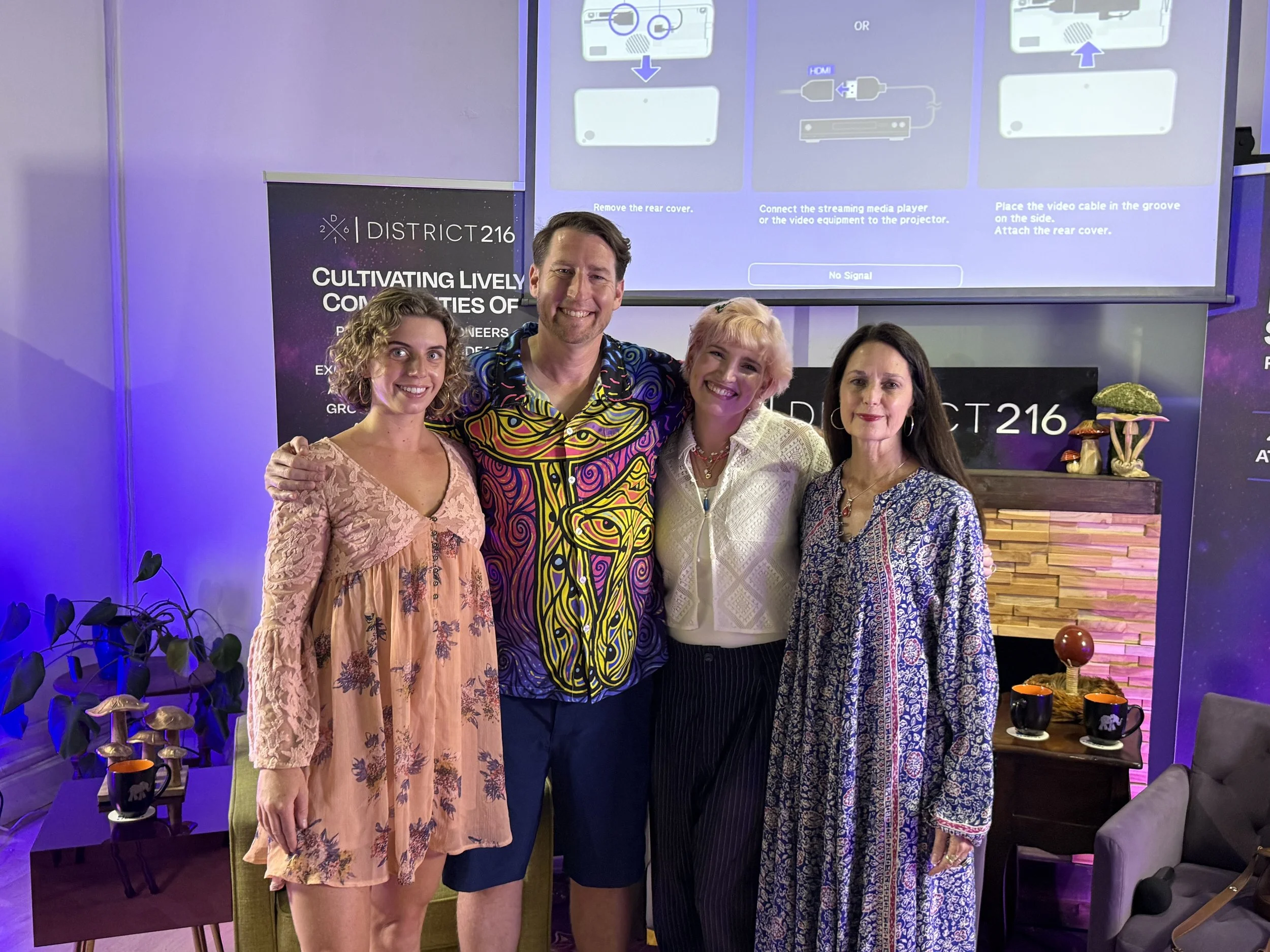
We’re deeply grateful to Jessalyn, Denise, Hannah Jo, and everyone who joined us this week for showing up with curiosity, discernment, and care. This is exactly the kind of dialogue District216 exists to hold.
With gratitude for our growing community,
District216 💜
