
Lindsay Kent on The Powers of Narrative: A Night That Reminded Us Why Stories Matter
Last week’s District House interview was the kind of night that impacts the way we reflect on culture. A full house, multiple rounds of applause throughout the evening, and an energy in the room that made it clear that this conversation needed to happen.
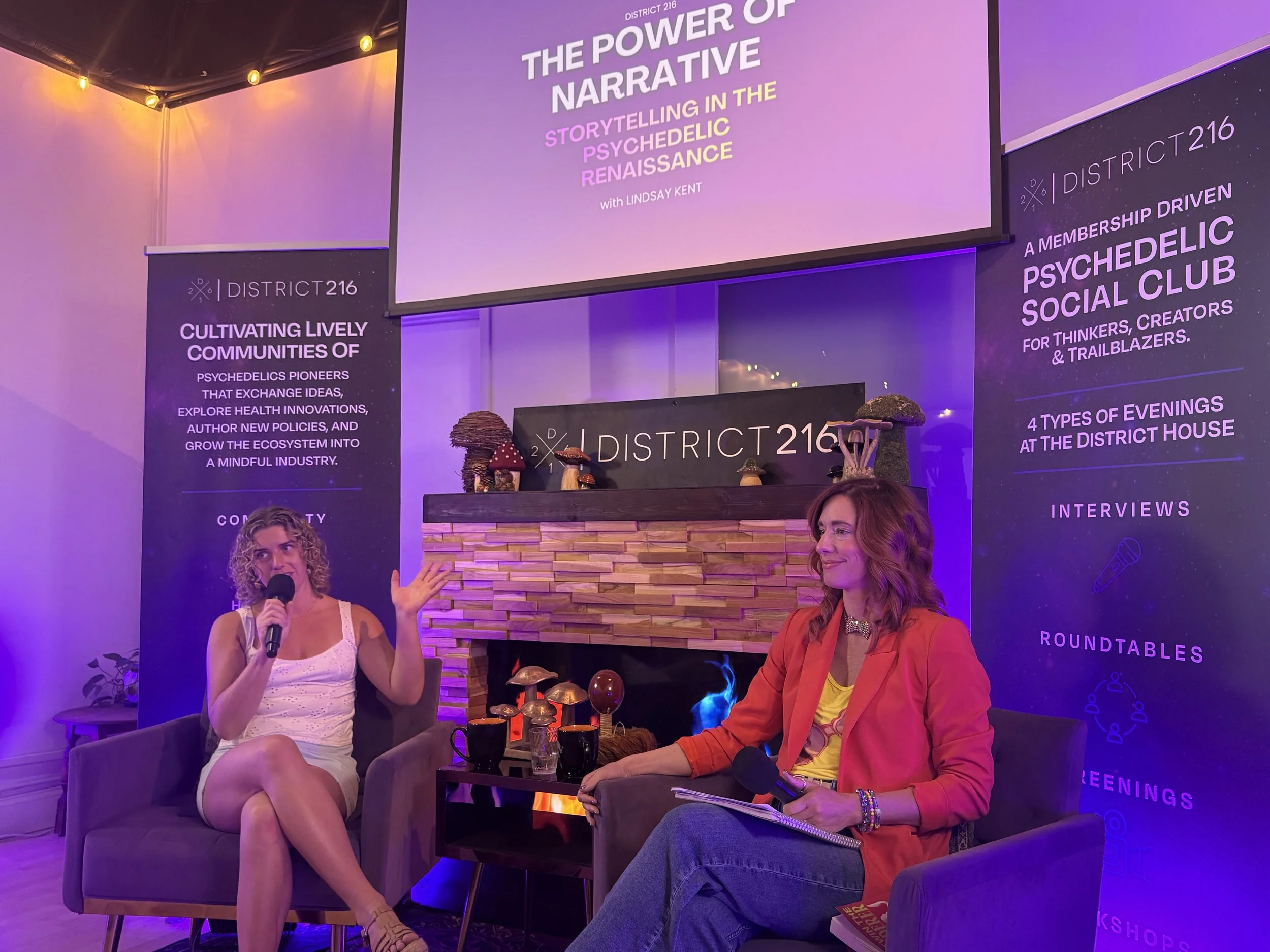
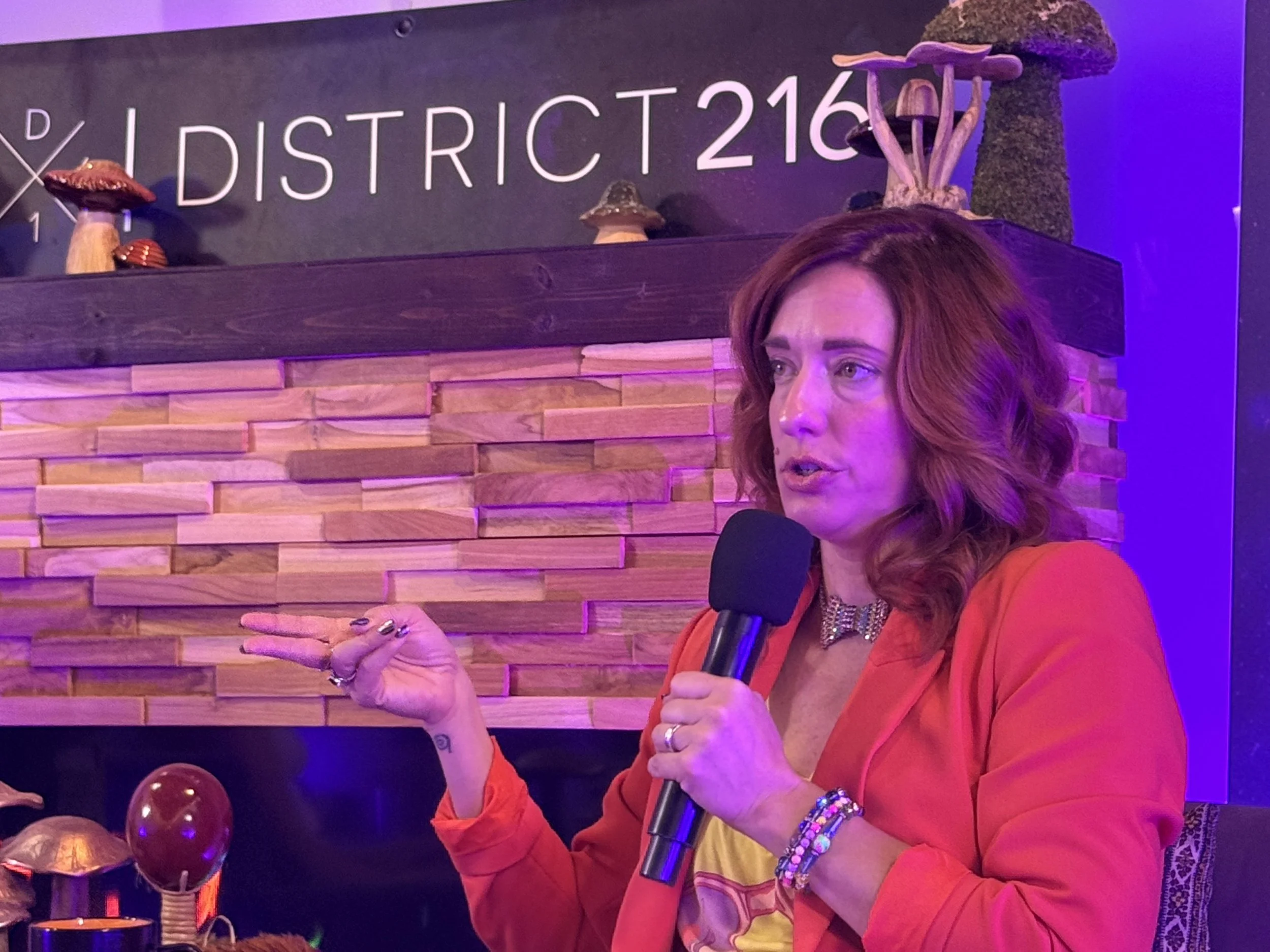
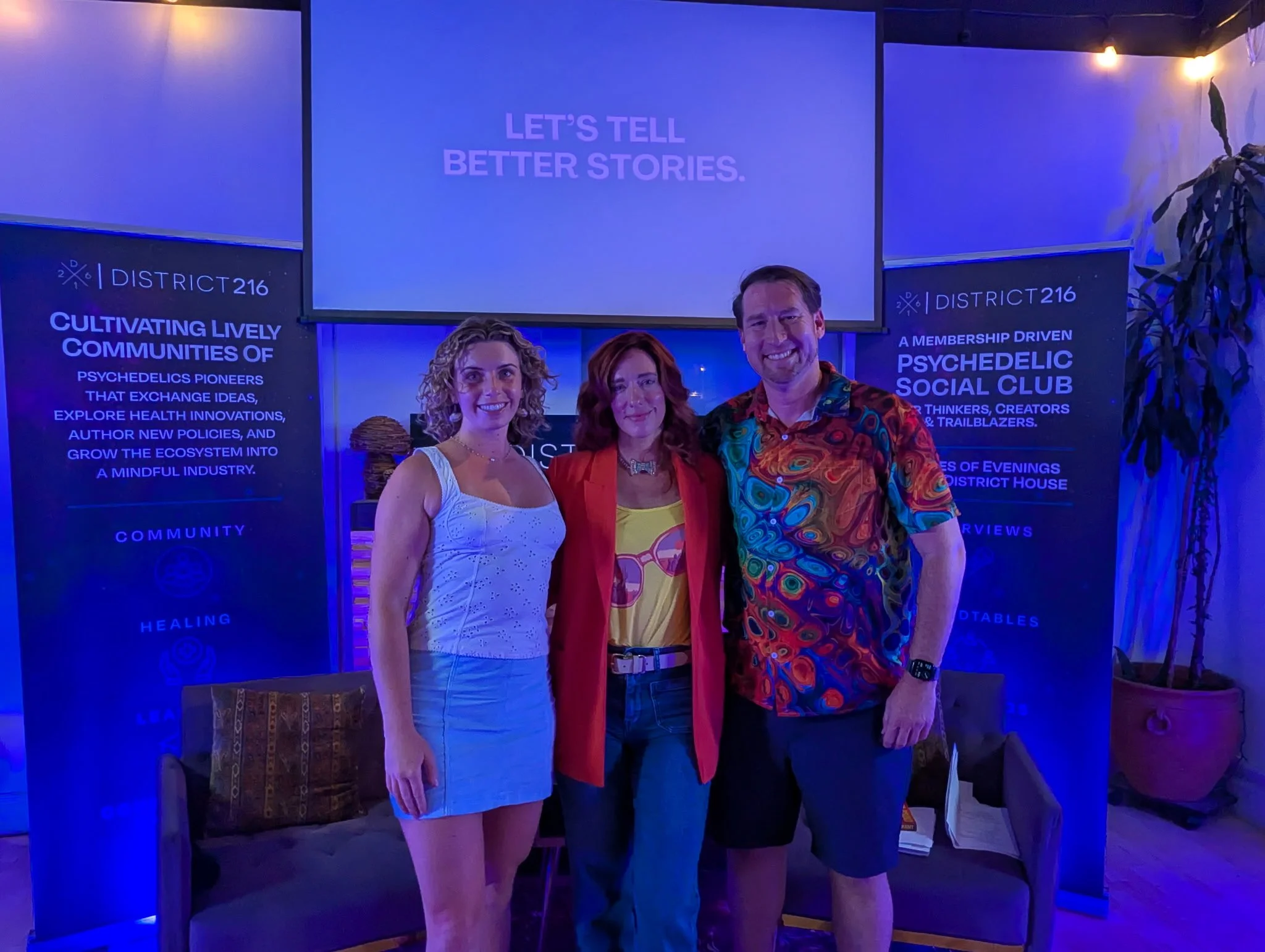
Lindsay Kent, known to many of you as The Hallucinarrator, joined us for "The Powers of Narrative: Stories and The Psychedelic Renaissance," and she delivered an outstanding presentation that wove together clips from her documentary film, slides outlining her theories, and a clear-eyed look at why the stories we tell about psychedelics may matter just as much as the science behind them.
Lindsay's central thread was simple but profound; humans don't change their minds through data alone, we change through story. As the psychedelic renaissance expands into medicine, media, wellness, policy, and pop culture, the narratives surfacing around it are quietly shaping what people fear, what they romanticize, what gets commercialized, and what actually gets integrated.
Drawing from her decade of work, including her 2014 documentary Going Furthur and her docuseries Plant Medicine, Lindsay showed how fiction, comedy, and film can communicate inner experience without ever preaching. That distinction landed hard with the room. There's a real difference between telling someone what a psychedelic experience means and letting them feel their way into understanding it through story.
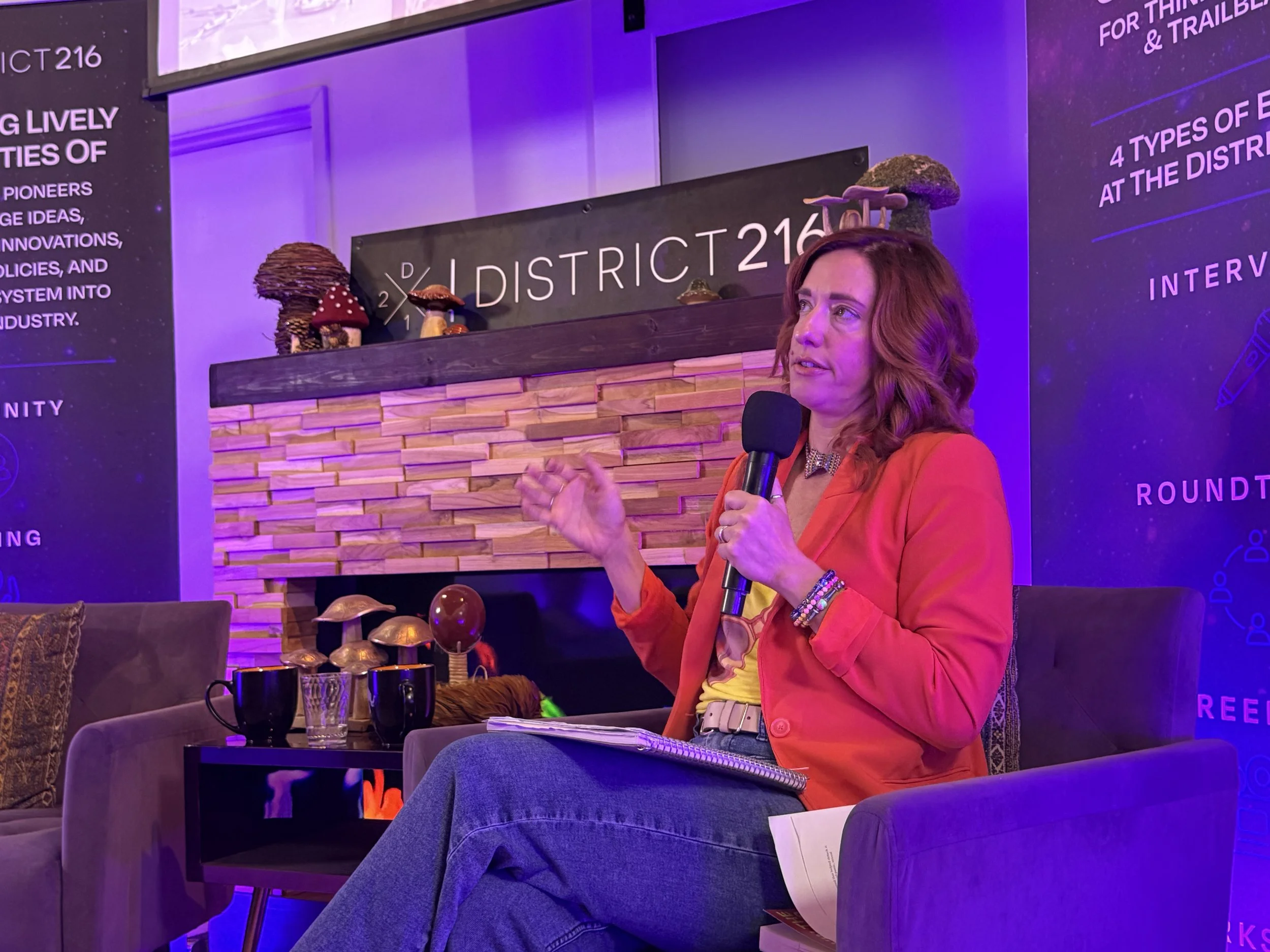
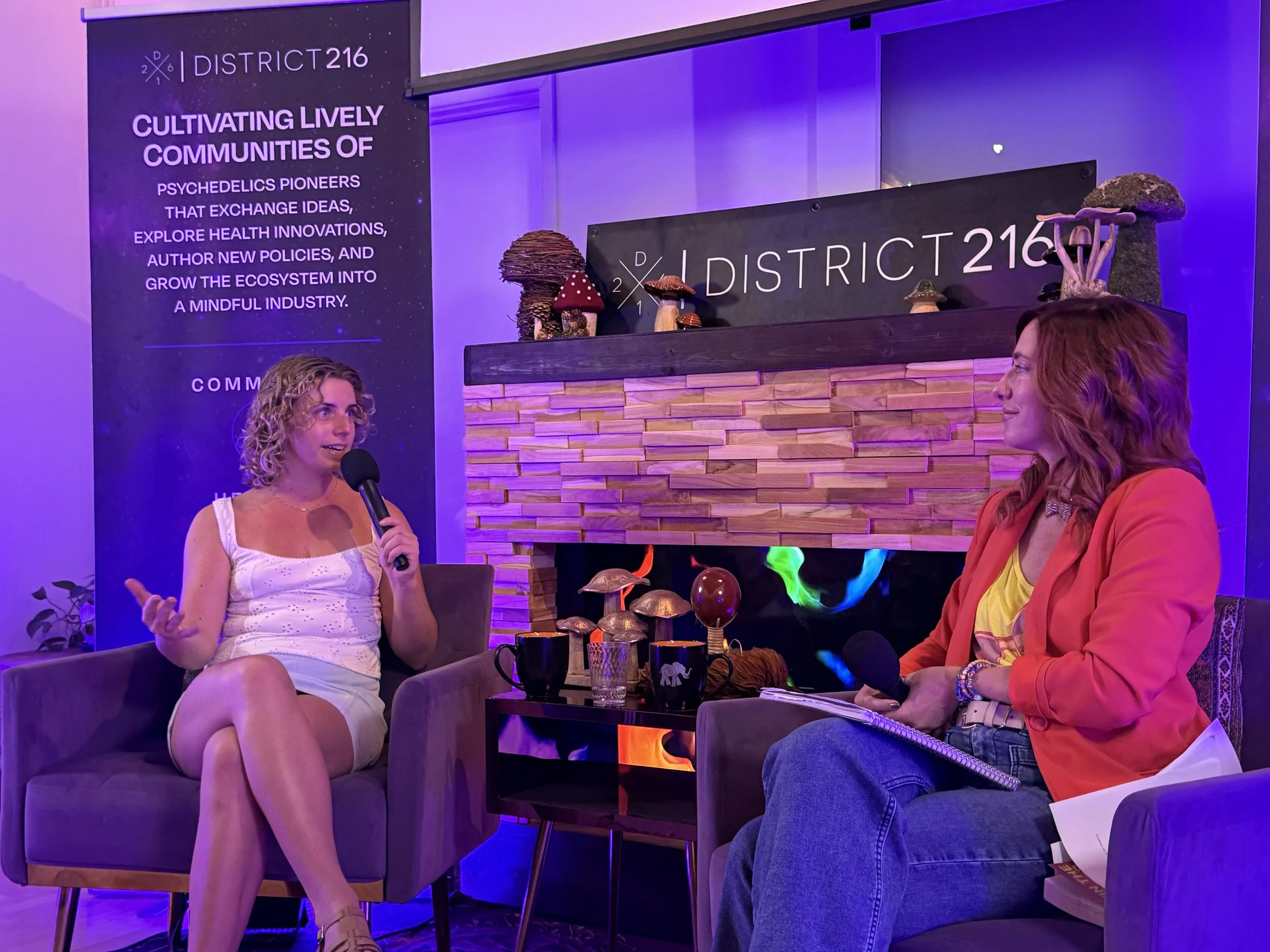
After Lindsay's presentation, Hannah Jo stepped in for the back half of the evening, and it was a top tier performance. She asked incredible questions, synthesized what Lindsay was sharing in real time, and reflected it back in ways that opened up even more depth. Lindsay herself was blown away by how present and sharp Hannah Jo was throughout the exchange.
The final stretch of the night opened up to audience Q&A, and the room ran with it. Questions about the ethical responsibility creators carry in a fast growing movement, about the so called "war on consciousness" really being a war over perception and meaning, and about how subculture and mainstream audiences can actually meet each other through narrative rather than talking past one another.
There was one more reason the room was buzzing. Lindsay just released her debut novel, My Twin the Murderer, and she had copies for sale in the back. By the end of the night, just about everyone in the room walked out with one.
It is a fitting next step for someone who has spent two decades moving between documentary and fiction. The book follows estranged twin sisters caught up in a murder investigation, buried trauma, and a psychedelic underground that forces one of them to question everything she thought she knew about her own mind. Lindsay has described it as her return to her first creative love after years in film, and you could feel that energy in the room as people lined up to grab a copy.
If you picked one up Wednesday night, you already know what we mean. If you missed it, you can find My Twin the Murderer wherever books are sold.
This is exactly the kind of evening District216 exists for. Not just information delivered at people, but a real exchange where a storyteller, a host, and a room full of curious humans build something together in real time. Lindsay's work lives at the intersection of consciousness and culture, and watching her unpack that alongside Hannah Jo's insight made for one of those nights where you could feel the room leaning forward.
If you were there, you already know what we're talking about. If you missed it, this is your reminder that these conversations happen because of this community, and there will be more like it.
Keep an eye on the calendar for the next District House, and if you haven't explored Lindsay's work yet, The Hallucinarrator is a great place to start.
💜
