
The Forgotten Sacrament: What Christian Rasmussen Taught Us About Amanita Muscaria
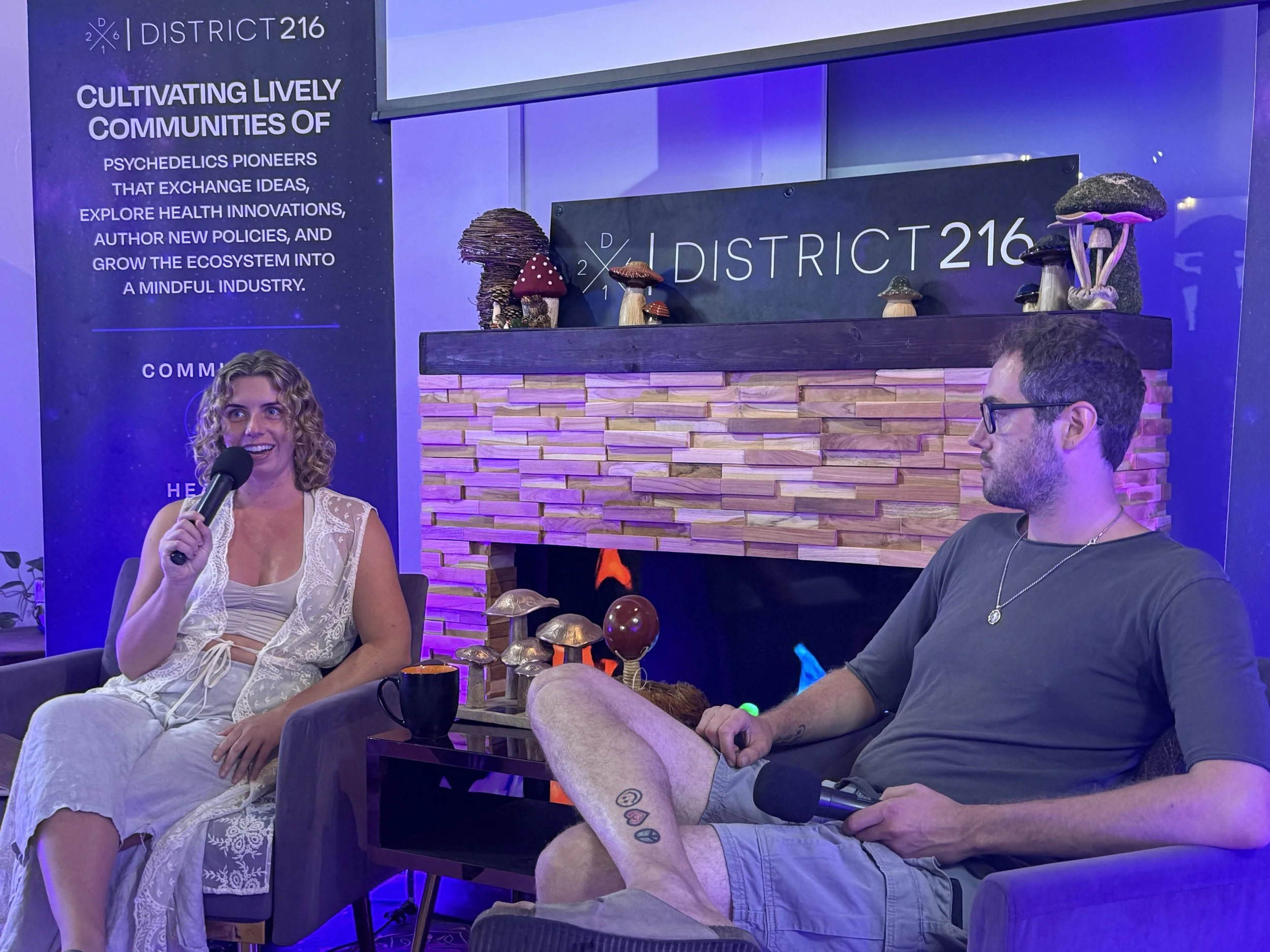
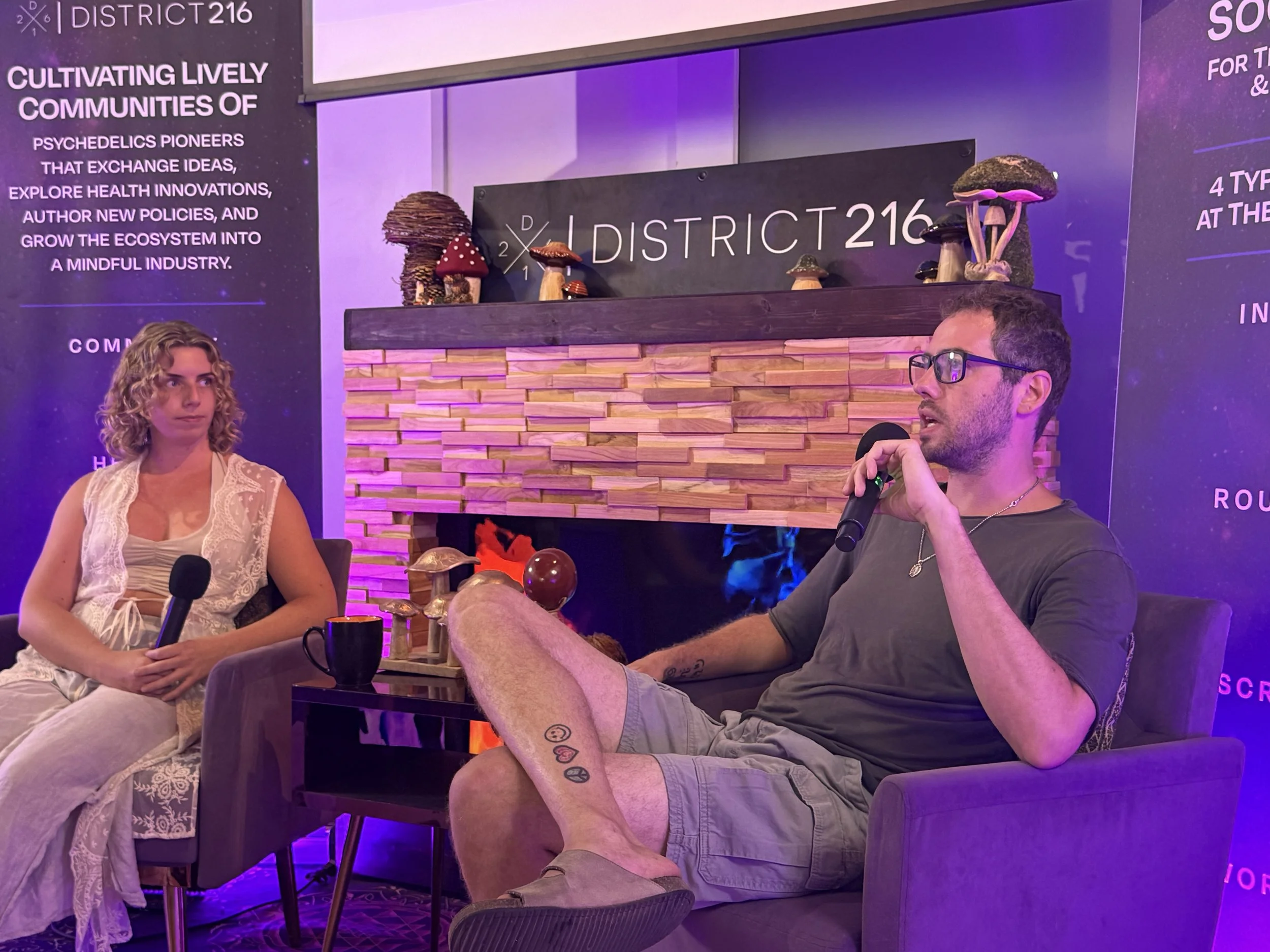
Some conversations don't need a projector. No slides, no visuals, no presentation deck. Just two people, a room full of curious humans, and a story so compelling that nobody reached for their phone. That's exactly what happened at our most recent District House gathering when Hannah Jo sat down with Christian Rasmussen for what turned into one of the most captivating evenings we've hosted at LoDo Studios.
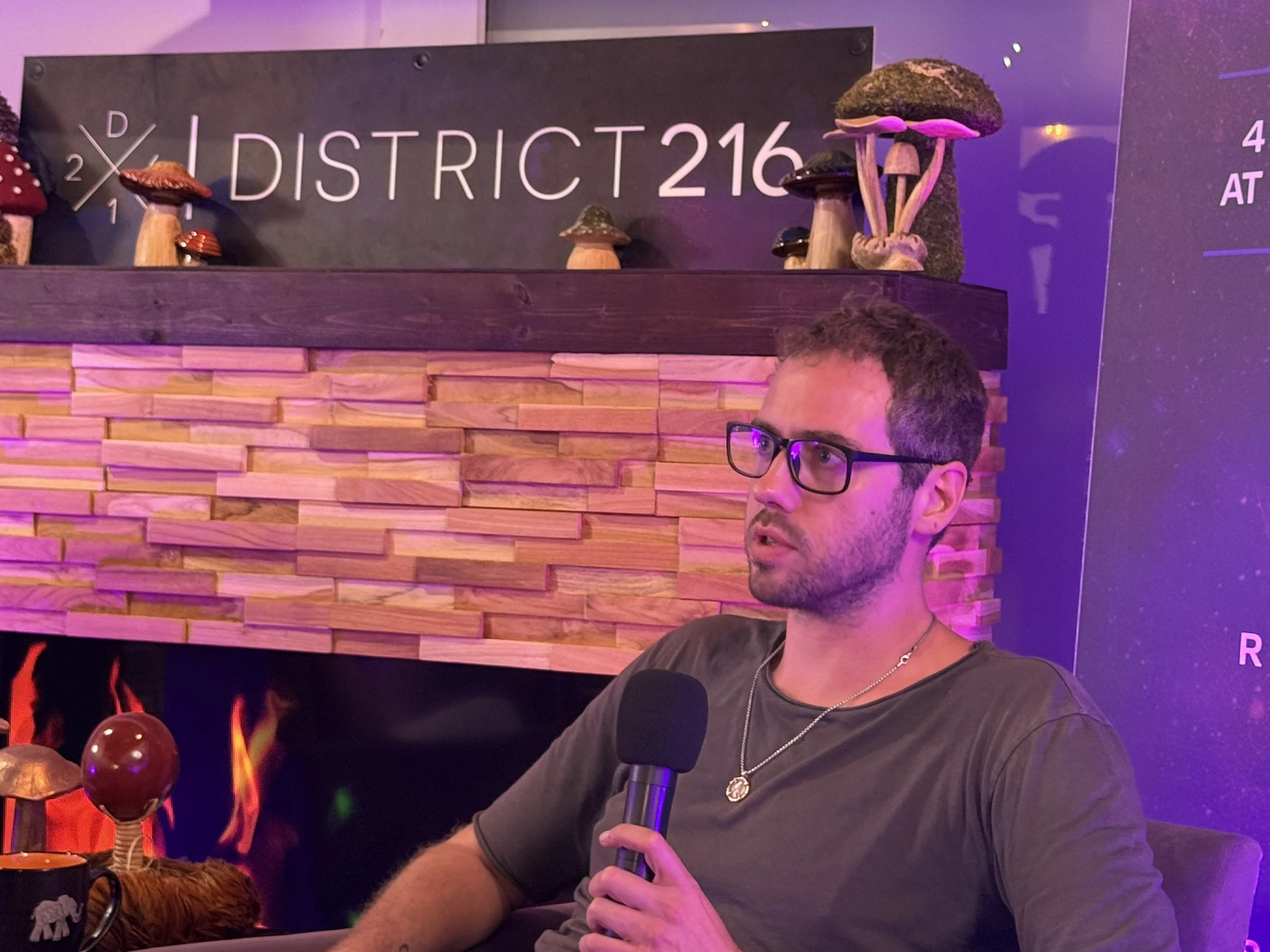
The topic was Amanita muscaria, the red-and-white spotted mushroom most people recognize from fairy tales and video games. But what Christian had to share went far deeper than pop culture iconography. This was a conversation about history, healing, and one of the most misunderstood fungal allies in human existence.
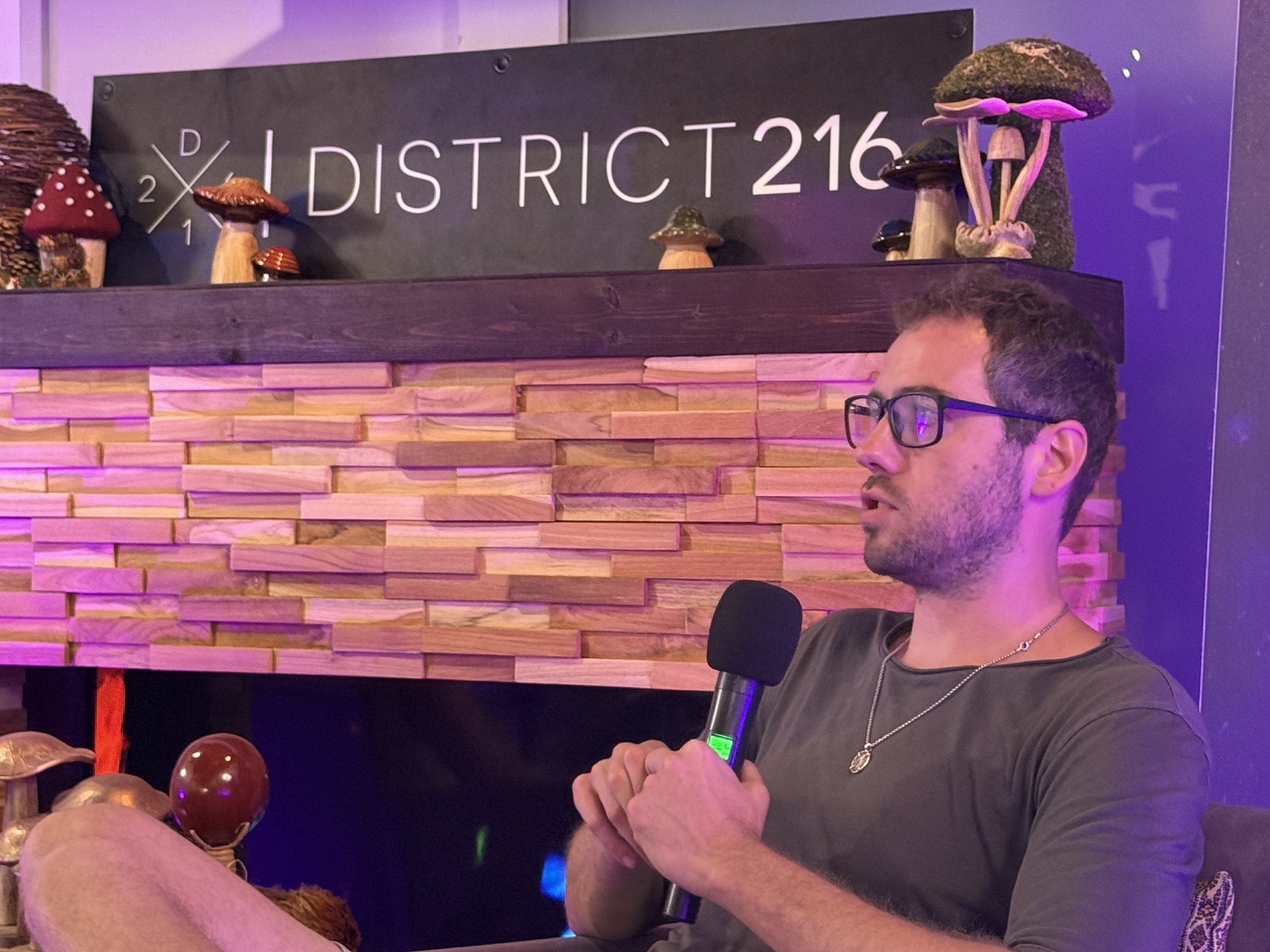
When the Mushroom Speaks, You Listen. Christian didn't open with data. He opened with an experience. He described the moment Amanita muscaria first found him, not the other way around, and what happened when he chose to listen. There was an exchange of information, he said, the kind that doesn't come from a book or a protocol. It was intuitive, direct, and deeply personal.
That intuition led him to work with Amanita in a way that helped bring his own GABA and glutamate systems back into balance after years of struggling with benzo and opioid dependency. These are neurotransmitter systems that get profoundly dysregulated through long-term use of those substances, and conventional medicine doesn't have great answers for restoring them. Christian found his way through a fungus that most of the internet will tell you to avoid.
He's not alone. And he's not reckless. He's been doing the research, building the sourcing infrastructure, and educating people about this mushroom for years as the founder of MN Nice Ethnobotanicals, one of North America's most respected Amanita retailers.
Here's the thing about Amanita muscaria: it has a reputation problem. Search for it online and you'll find a wall of warnings, misidentification horror stories, and dismissive write-offs. Some of that caution has roots in legitimate confusion. Amanita muscaria does require proper preparation and respect. But a significant portion of what circulates online is propaganda layered over centuries of deliberate cultural erasure.
Christian walked our audience through the history. Amanita muscaria appears in ancient Vedic texts, in Siberian shamanic traditions, in Norse mythology, in the iconography of Christmas itself. This mushroom was once regarded as a sacred sacrament across cultures spanning continents and millennia. Its story didn't disappear by accident. It was obscured, and reclaiming that story is part of what Christian has dedicated his work to.
The pharmacology is distinct from psilocybin mushrooms. The active compounds, muscimol and ibotenic acid, work on the GABA-A receptor system rather than serotonin receptors. That's precisely why Christian's intuitive approach to his own healing makes neurochemical sense. It's also why proper preparation matters: the drying and decarboxylation process converts ibotenic acid to the gentler, more therapeutically interesting muscimol. This isn't a mushroom to approach casually, but it is one worth understanding.
What made the evening special wasn't just what Christian knew. It was how he shared it. Hannah Jo has a gift for drawing out the real story, and the conversation between them had a natural rhythm that held the room from start to finish. No notes, no slides. Just genuine dialogue that kept deepening.
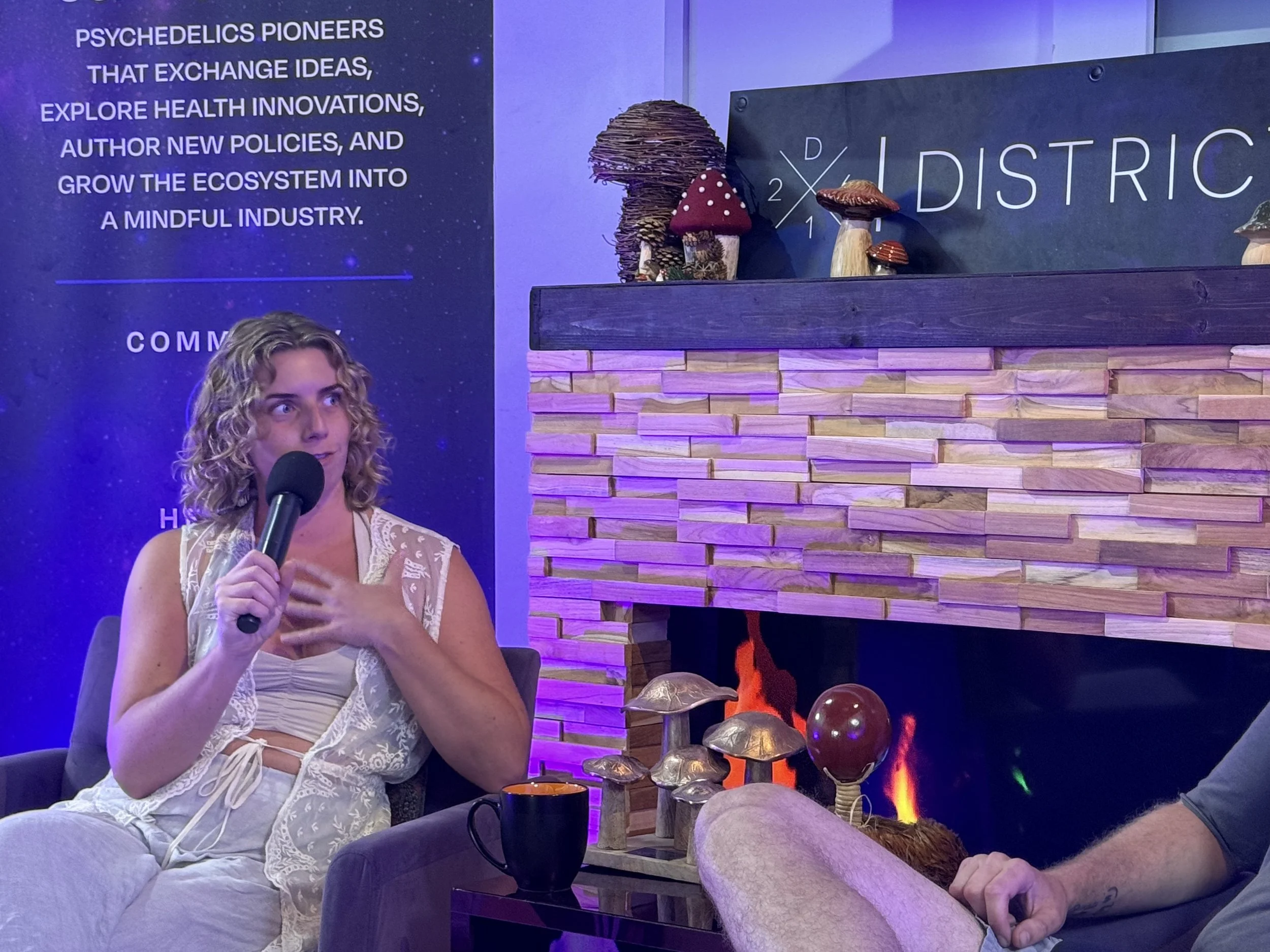
When the formal interview wrapped, the audience didn't want to leave. The Q&A that followed was rich and wide-ranging, with questions about personal use, sourcing, historical context, the legal landscape, and what responsible engagement with Amanita actually looks like. Christian fielded every question with the same grounded clarity he brought to the interview itself.
At the end of the evening, Christian had his Amentara products available at a table in the back. For many in the room, it was their first chance to hold an Amanita product, ask questions directly, and make a considered choice about whether this was something they wanted to explore. That kind of access, educational first, then experiential, is exactly the model we want to build at District216.
We talk a lot about normalizing healing. About creating space for conversations that don't happen anywhere else. This evening was a clear example of why that work matters. Amanita muscaria has been part of the human story for longer than most of our cultural institutions have existed. The fact that most people only know it as a Mario Bros. mushroom says everything about how effectively that story has been buried.
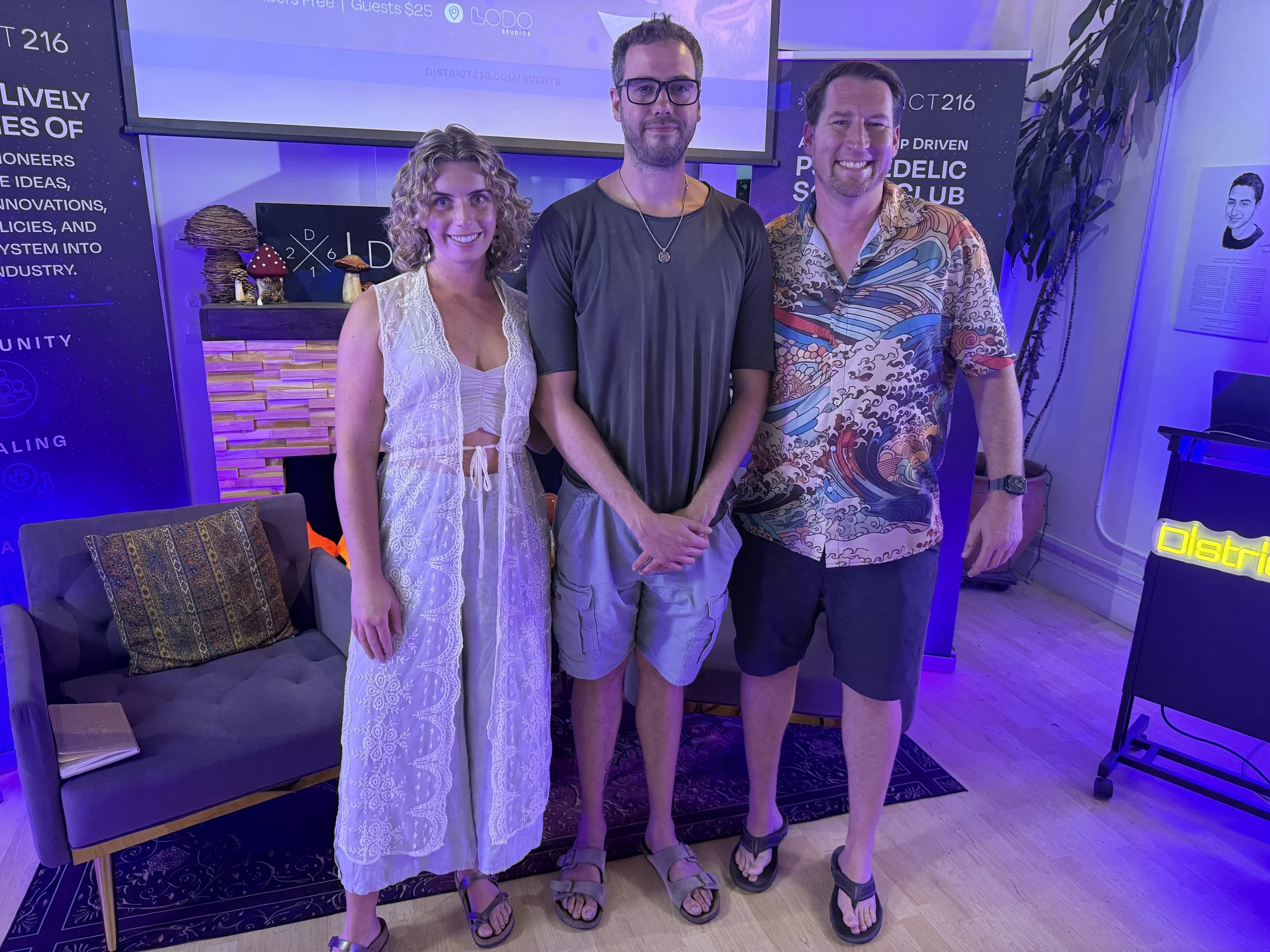
Bringing it back into the light, carefully, honestly, with reverence for both the science and the tradition, is the kind of work our community was built for. We're grateful to Christian for sharing his knowledge and his personal journey so openly, and to Hannah Jo for holding the space with the curiosity and warmth she always brings.
If you missed this one, keep an eye on upcoming District House events at district216.com. These conversations are happening regularly, and this is exactly the room you want to be in.
