
Sober, Of Sound Mind: Beverly Hur on Going Beyond the Program and Finding Real Healing
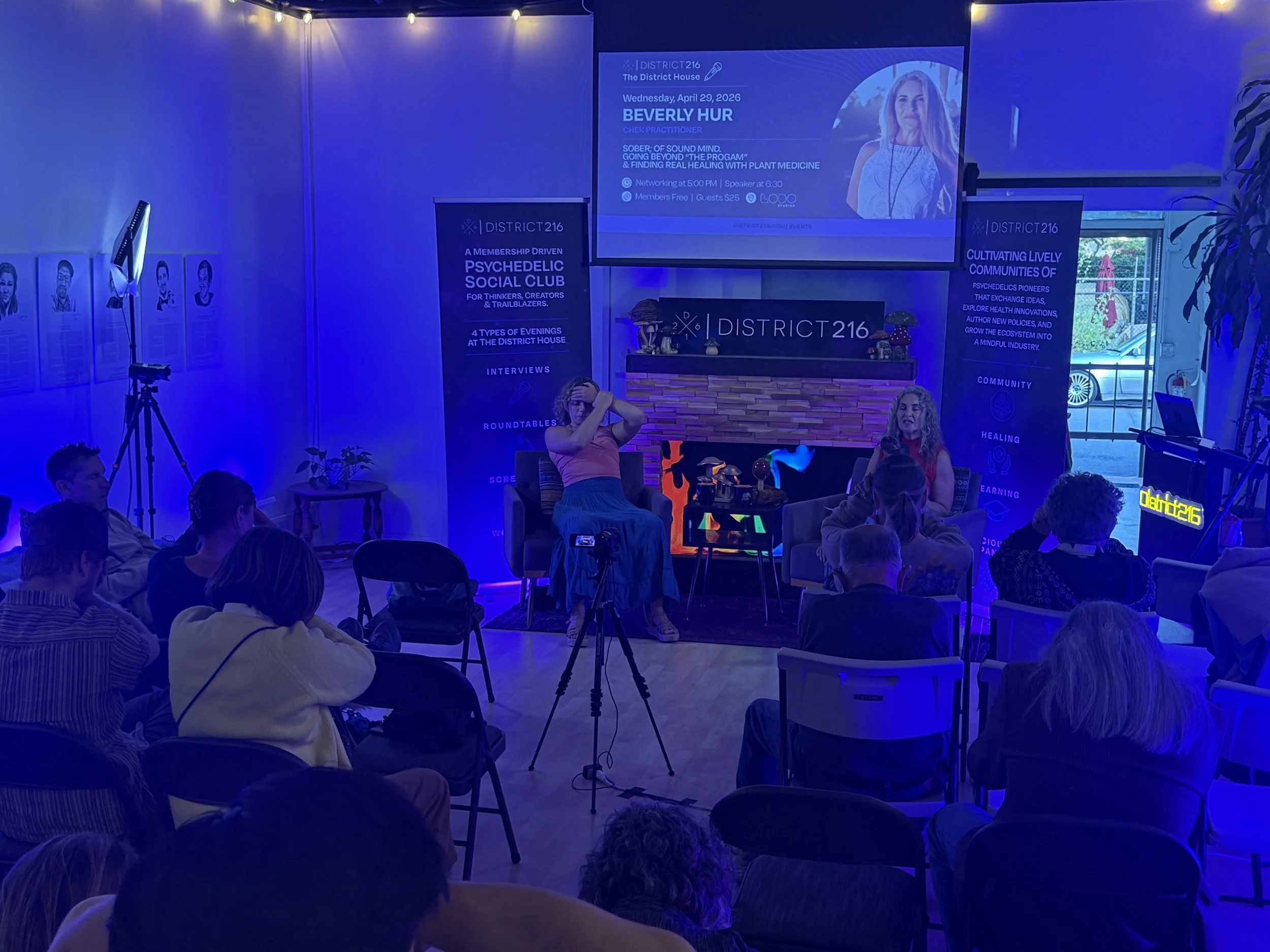
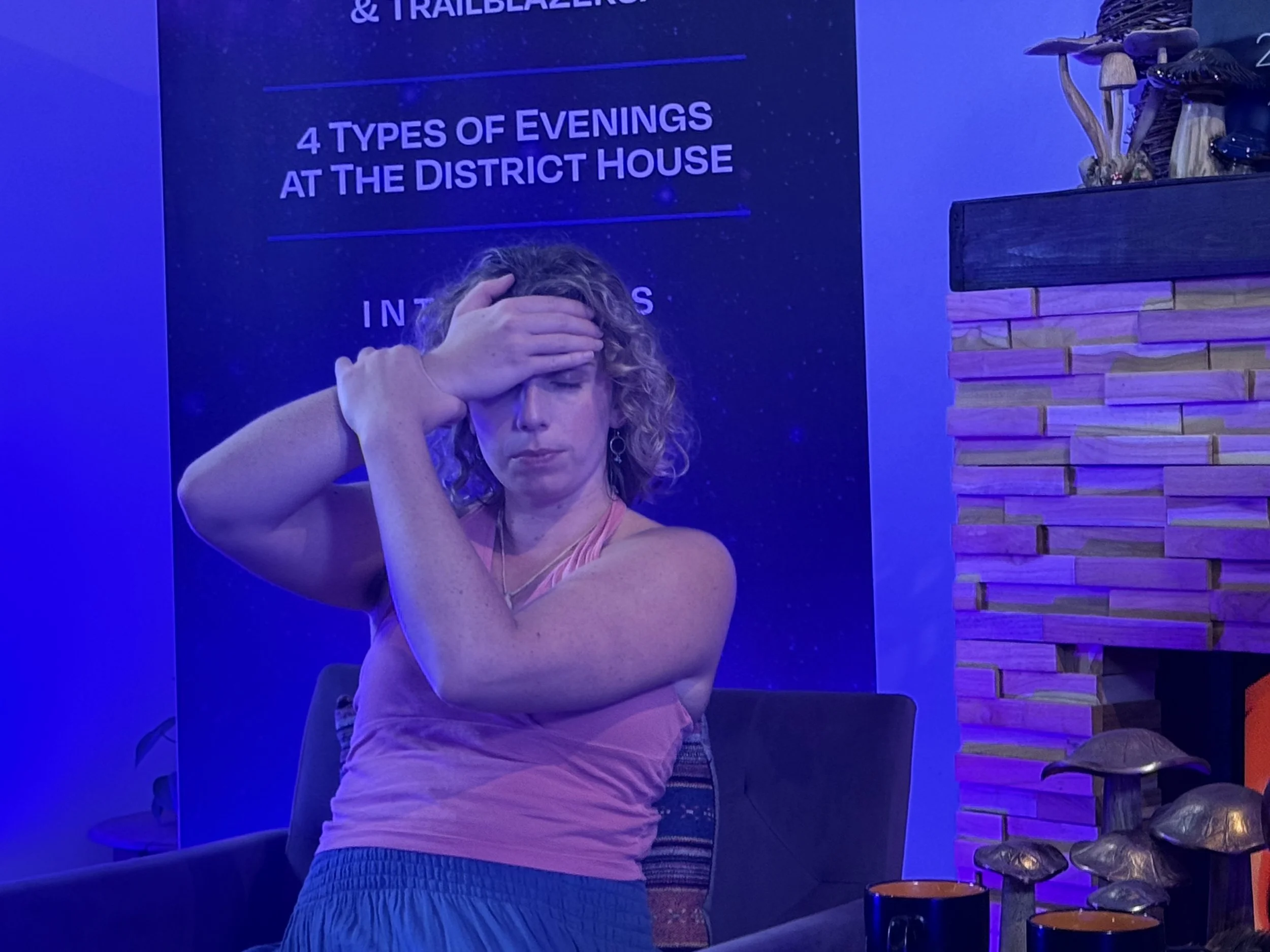
Before Beverly Hur said a single word about her story, she led the room through something. Fingers on pressure points at the wrists and hands. Palms resting on foreheads. Beverly's voice guiding us through ways to let go of what we'd carried in that day, breathing through it together. Twenty minutes of genuine stillness. By the time Hannah Jo sat down across from her to begin the interview, the room was already open. Already ready to receive something real.
And Beverly delivered.
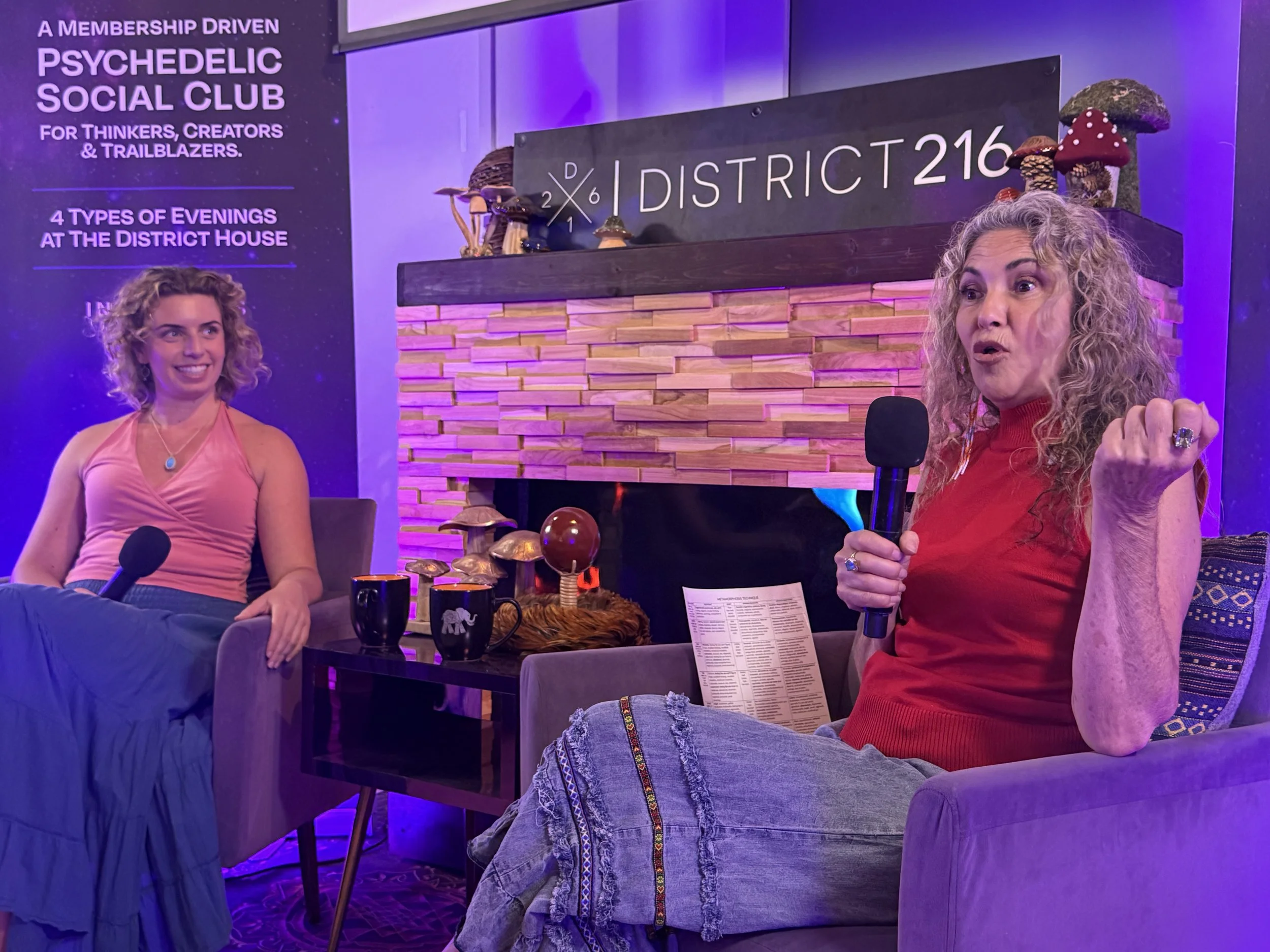
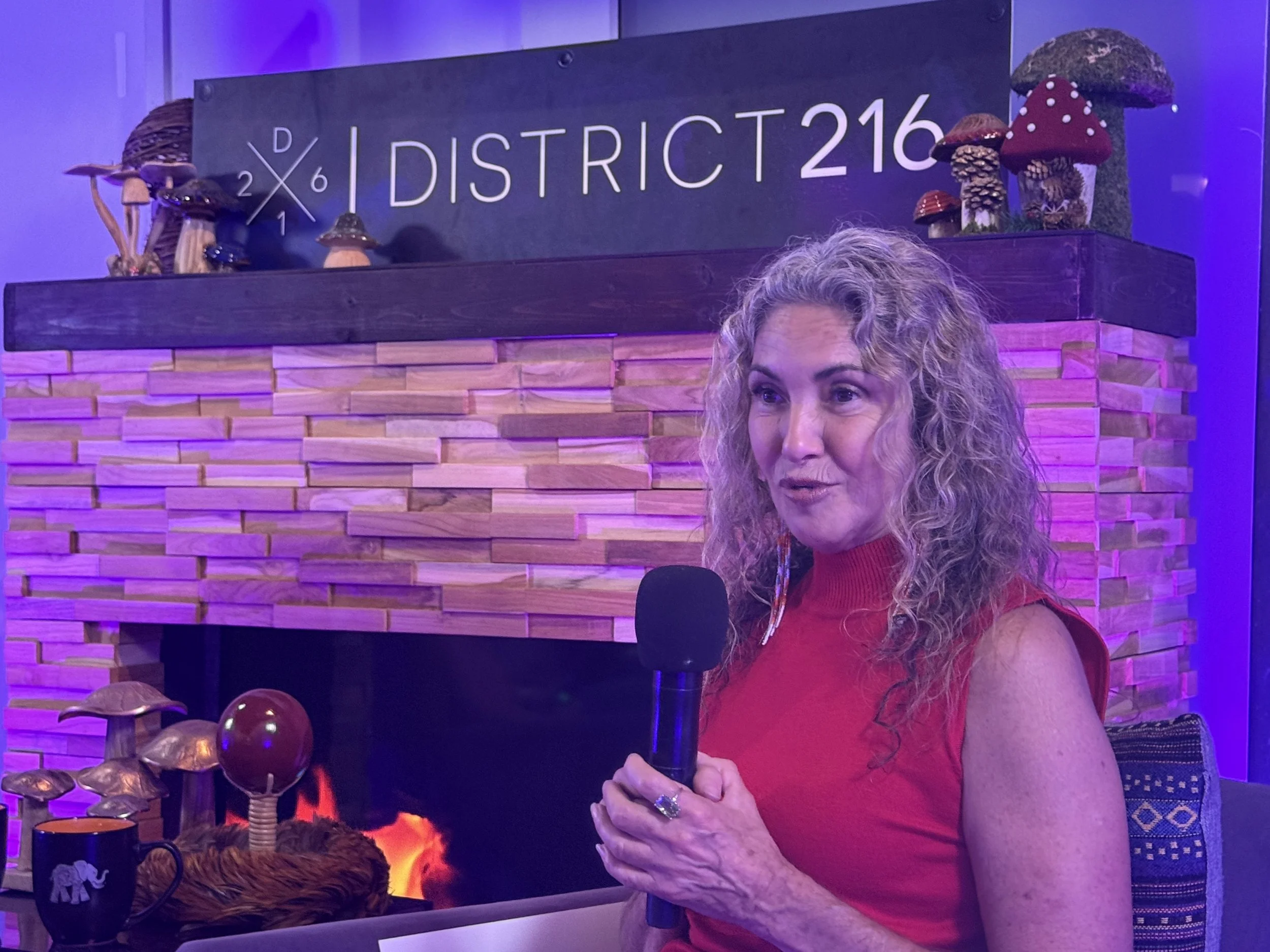
She talked about her past, her addiction, her years in 12-step, and the moment she decided to go further. What followed was one of the most honest, quietly courageous conversations we've had at District216. A story about plant medicine, lost community, and a deeper kind of freedom she didn't expect to find.
Beverly was the model of recovery. Committed. Consistent. Accountable. She worked the program with integrity and stayed in it for over a decade and a half. And still, something wasn't quite right.
Emotional flare-ups that felt disproportionate. Difficulty really connecting with others. An old reflex to withdraw when she felt hurt. She tried meditation. She tried breathwork. Both helped. But Beverly kept sensing something deeper waiting to be addressed, something that the steps couldn't quite reach.
This is one of the hardest things to name when you're inside a recovery community: the program saved your life, and you're genuinely grateful. And also, it's not the whole story. Beverly had the courage to say that out loud.
Her search eventually led her into somatic healing, and from there into plant medicine work. Beverly didn't come to ceremony casually. She was a CHEK Practitioner, a longtime student of nutrition, fitness, and holistic health. She had done serious inner work. But the first ceremony was still intense, unexpected, and ultimately life-changing.
She described what it felt like when long-held trauma finally released. Not as a dramatic breakthrough, but as a quiet settling. Clarity. Steadiness. What she called being truly "of sound mind." For the first time in her adult life, she felt like she could access something underneath the recovery identity she'd built, something more original and more hers.
This is exactly the kind of experience that the research is starting to support. Trauma lives in the body. It lives in patterns of withdrawal and activation that talk therapy and willpower alone often can't fully reach. Plant medicine, used intentionally and in the right containers, can go to those places. Beverly's story is a living example of why that matters.
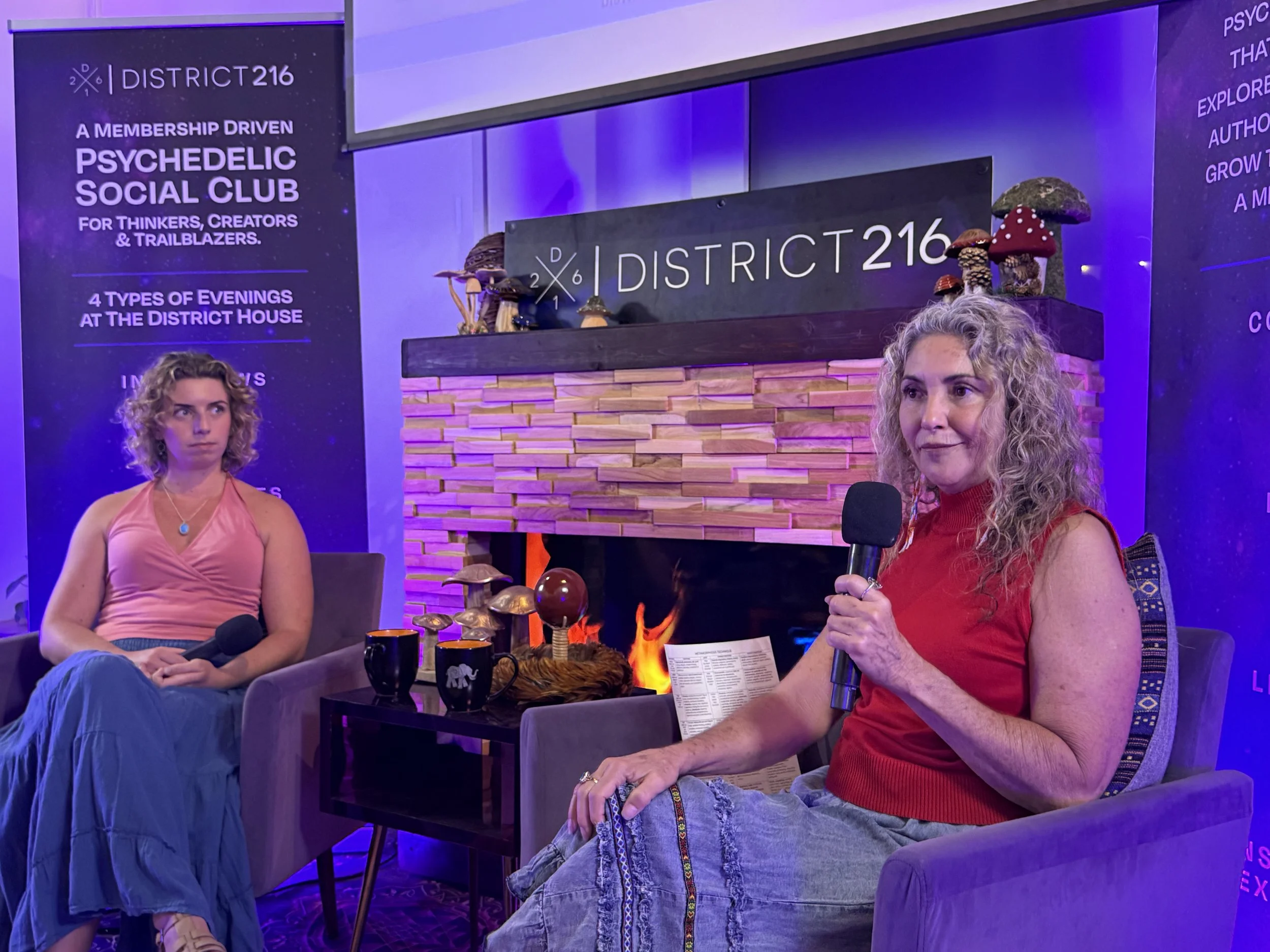
Here's where Beverly's story gets really real. Her healing didn't come free. When she began incorporating plant medicine into her recovery, she lost relationships. Close ones. People she'd built years of accountability and community with. In 12-step culture, the line around sobriety is firm, and plant medicine sits on the wrong side of it for many people.
Beverly didn't minimize how painful that was. She lost a network. She lost her people, at least the version of her people who could only see her within the frame of the program. She talked about it with a kind of quiet grief that felt very human and very honest.
But she also found something on the other side. A different kind of community. One built not around a shared identity of recovery, but around a shared pursuit of wholeness. People who weren't afraid of complexity. People who could hold multiple truths at once.
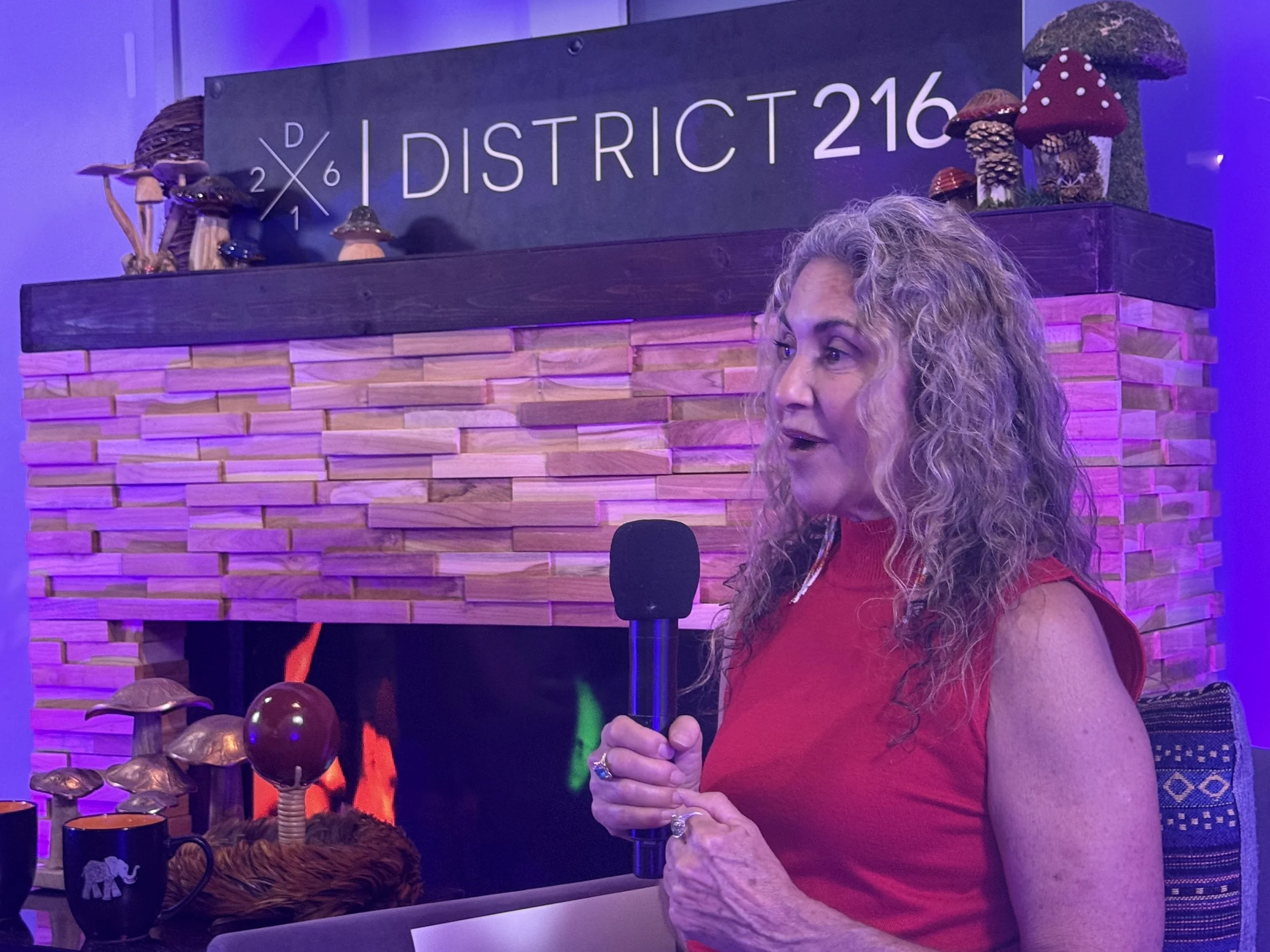
Beverly's definition of sobriety has evolved. It's no longer about abstinence from a list of substances. It's about integrity. Presence. Real connection. And actual joy, not the performance of gratitude, but joy that shows up on its own because the internal static has cleared enough to feel it.
She's now in training to facilitate ceremonies herself, teaching workshops on health, the Divine Feminine, and elderhood, and building an online platform that extends this work beyond Santa Barbara. Her path has been anything but linear, and that's exactly what makes it worth paying attention to.
At District216, this is why we do what we do. We create space for conversations like this one, conversations that don't fit neatly into existing frameworks, that ask hard questions about healing, identity, and what it means to live freely. Beverly walked into that space and gave it everything she had. Hannah Jo held the room beautifully, and the community showed up.
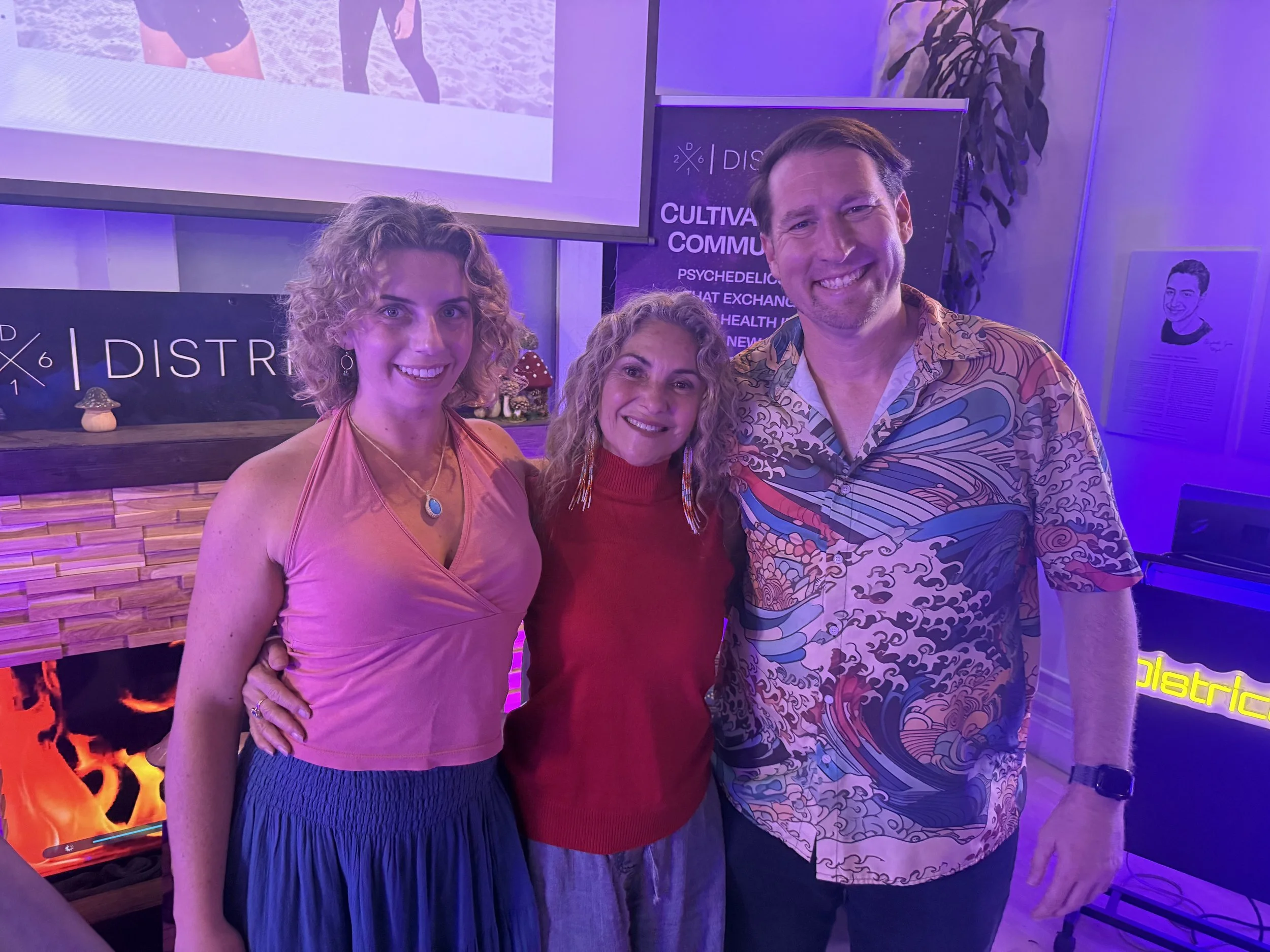
If you missed it, keep an eye on the District216 channel for the full recording. And if Beverly's story is touching something in you, that's probably worth paying attention to. 💜🍄
