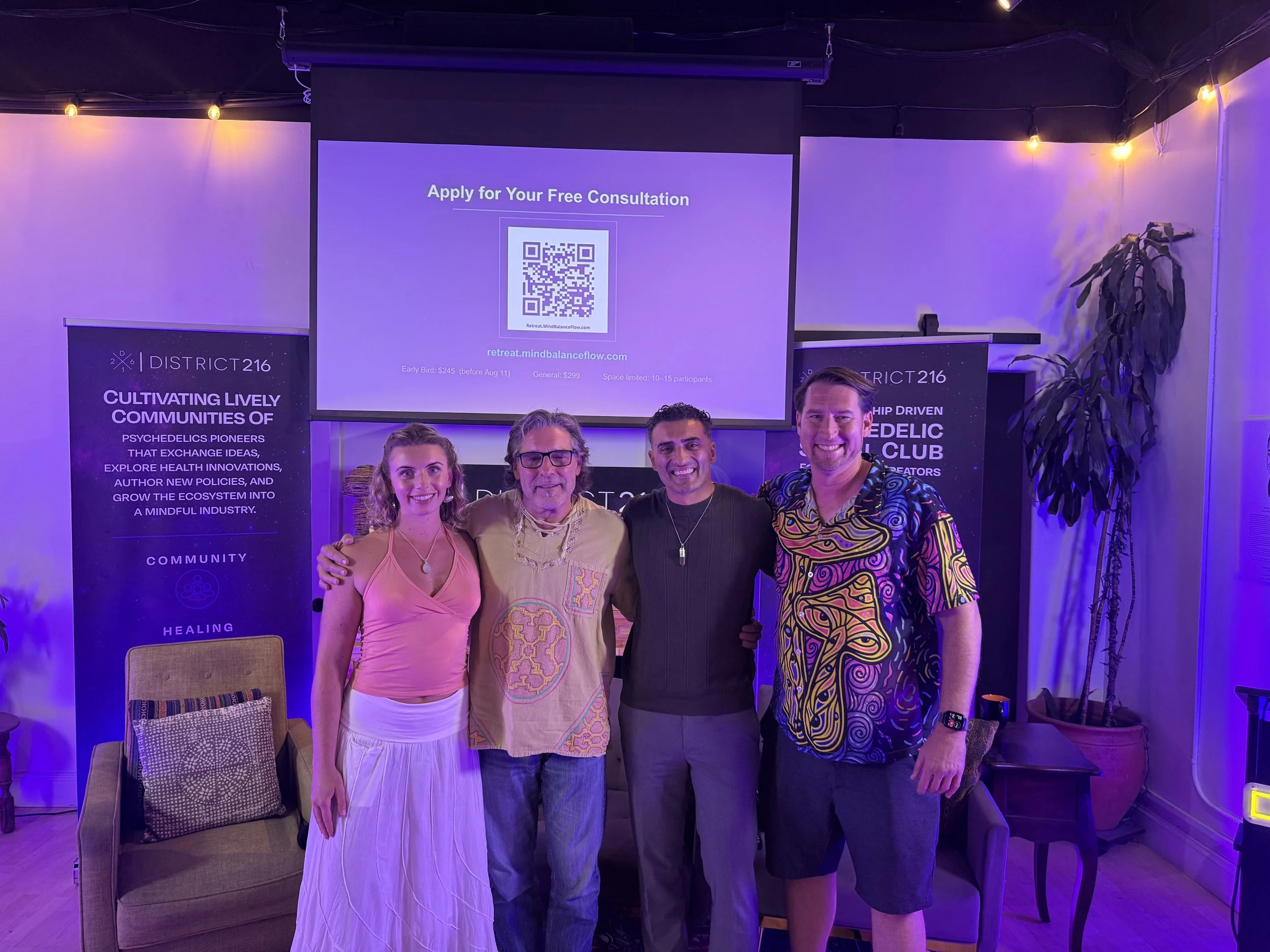
The Power of Ketamine-Assisted Therapy: A Night That Blended Medicine and Ceremony with Dr. Michael Hofrath & Dr. Elyas Parsa
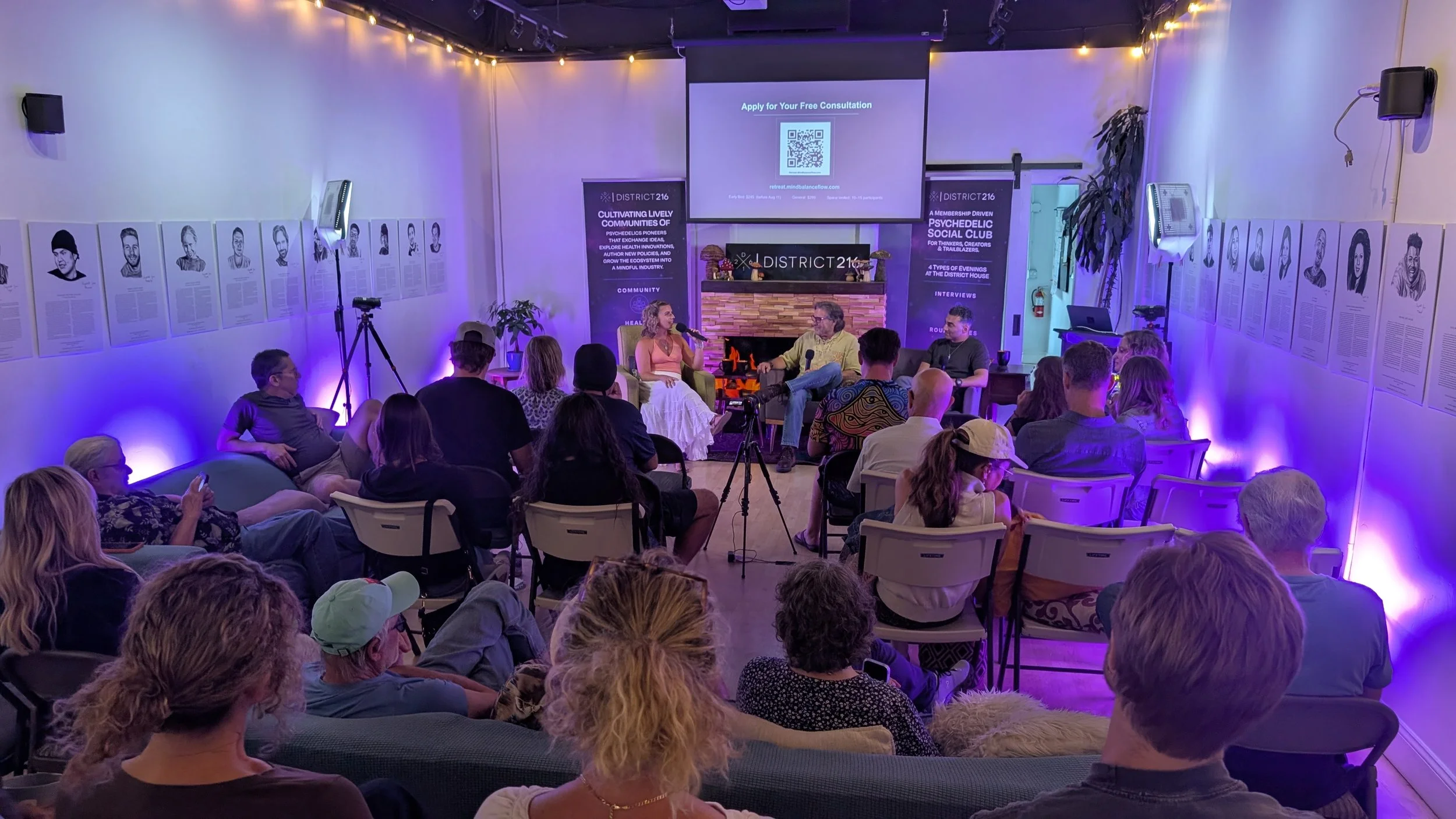
Michael Hofrath asked everyone to close their eyes, drop into the breath, and just arrive, and for a minute, dozens of people who'd walked in carrying the noise of their day were suddenly, collectively, still. That guided meditation wasn't a warm-up act. It was the whole point, set up front: this conversation about ketamine-assisted therapy wasn't going to live only in the mind. It was going to ask something of the body, too.
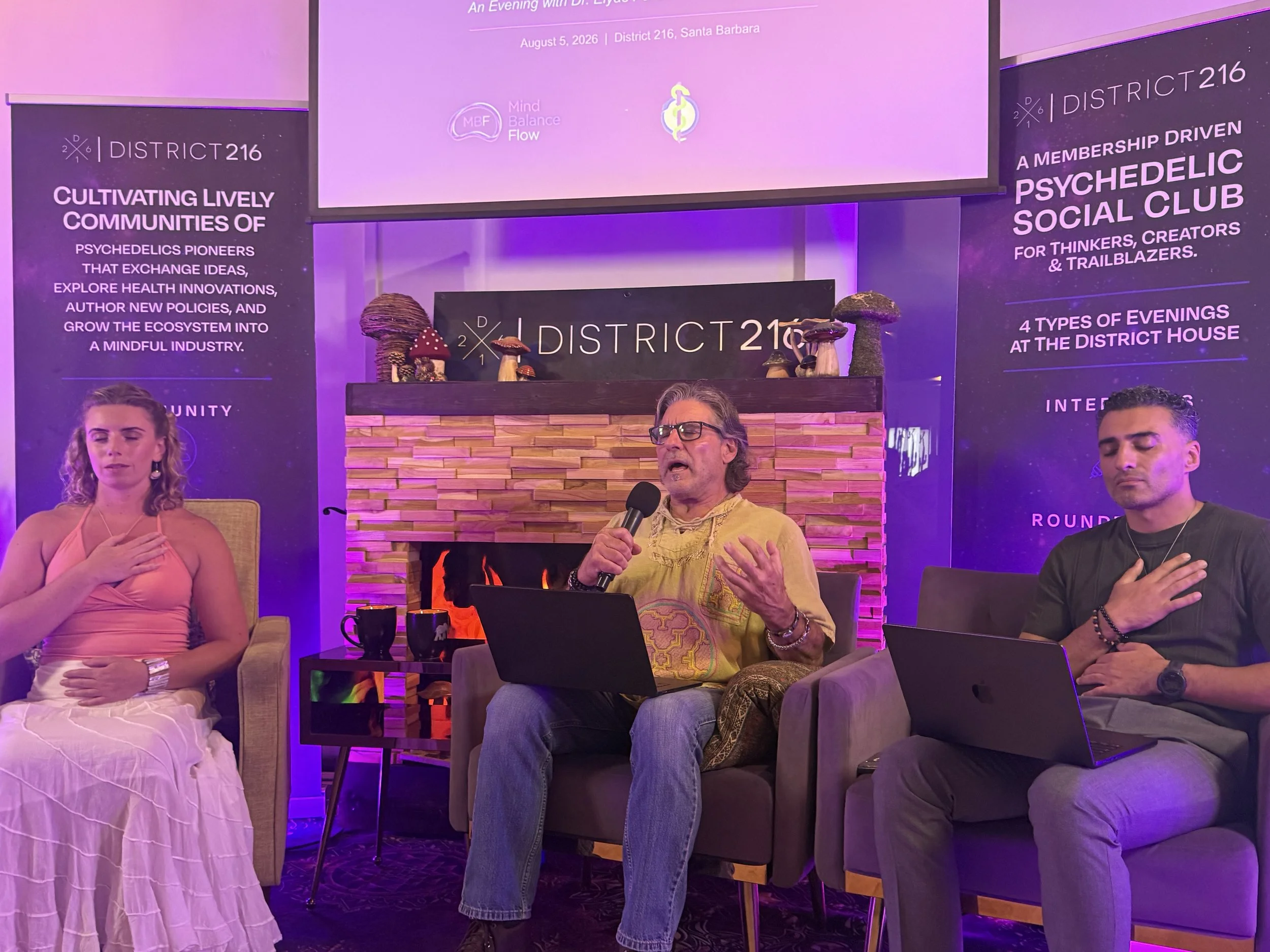
This evening with Dr. Michael Hofrath and Dr. Elyas Parsa we didn’t merely learn about the medicine. Hannah Jo led the interview that followed, and what unfolded was a layered conversation: part neuroscience lecture, part ceremony, part honest talk about what it actually feels like to let your nervous system finally exhale.
Michael and Elyas presented together, walking the crowd through their group model for ketamine-assisted therapy: how sessions are structured, what preparation and integration actually look like, and why the "assisted" part of the name is doing more work than people assume. But what made the presentation land wasn't the slides. It was the way these two practitioners hold fundamentally different, and fundamentally complementary, languages for the same medicine.
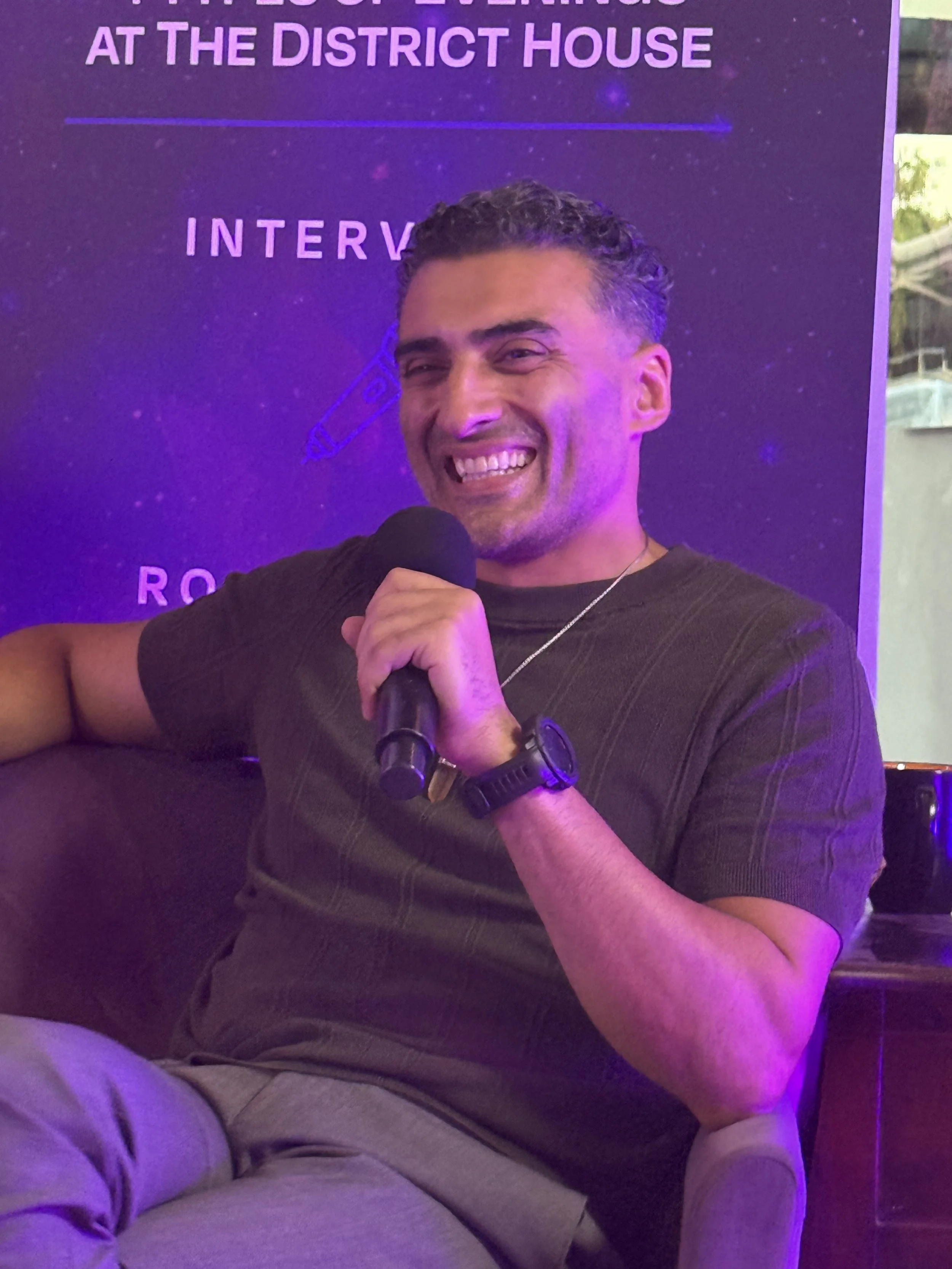
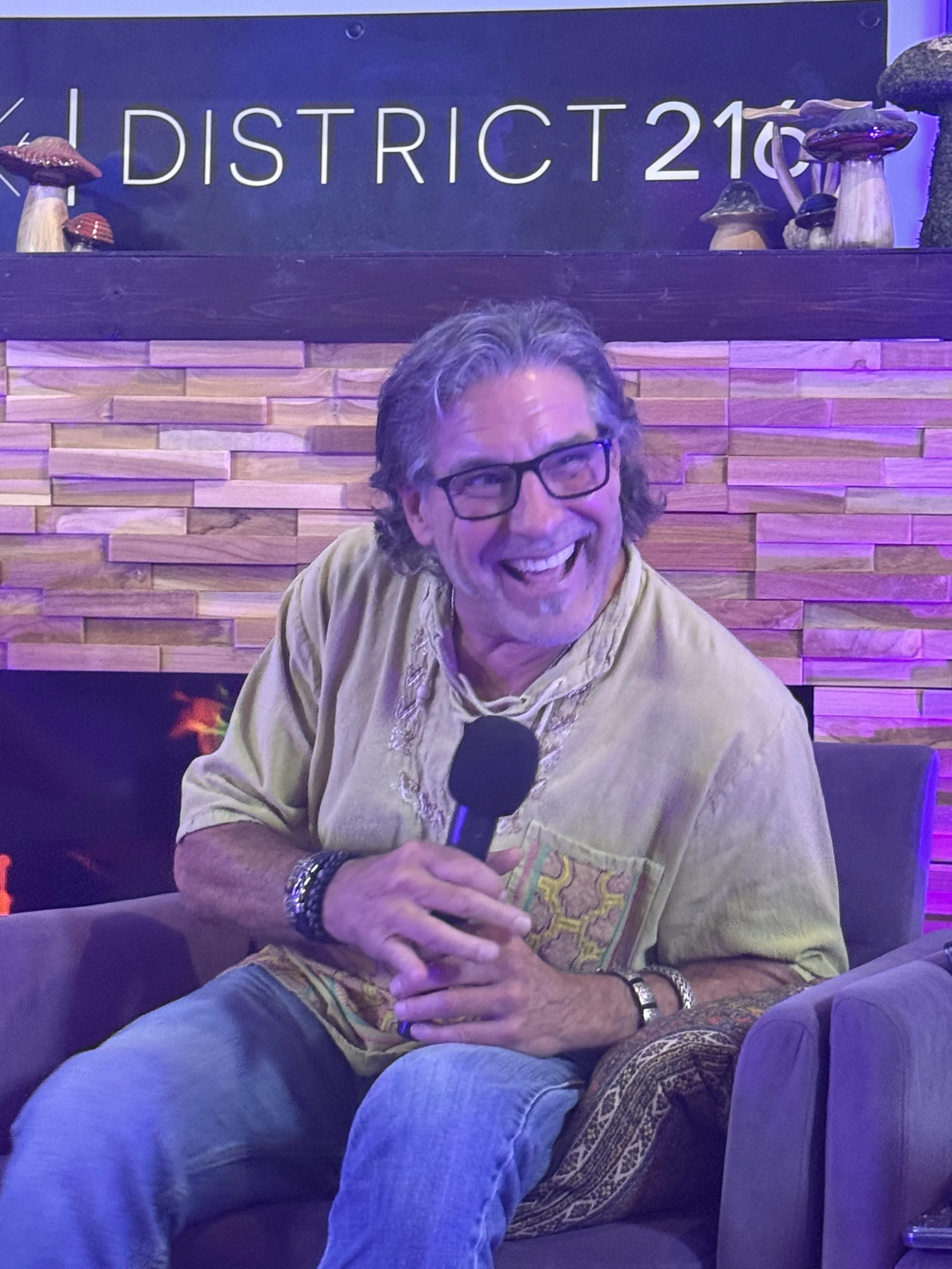
Elyas brings the clinical weight: fifteen years across county hospitals, emergency rooms, street medicine, and residency training, plus a precise medical vocabulary for what ketamine is actually doing in the brain, the synaptogenesis, the loosened grip of old neural patterns, the biological window that opens for something new to take root. Michael brings something harder to put on a slide: two decades in somatic science, shamanic tradition, and depth psychology, and a fluent way of speaking about ancestors, culture, and inner work that treats the therapy room as sacred space, not just clinical space.
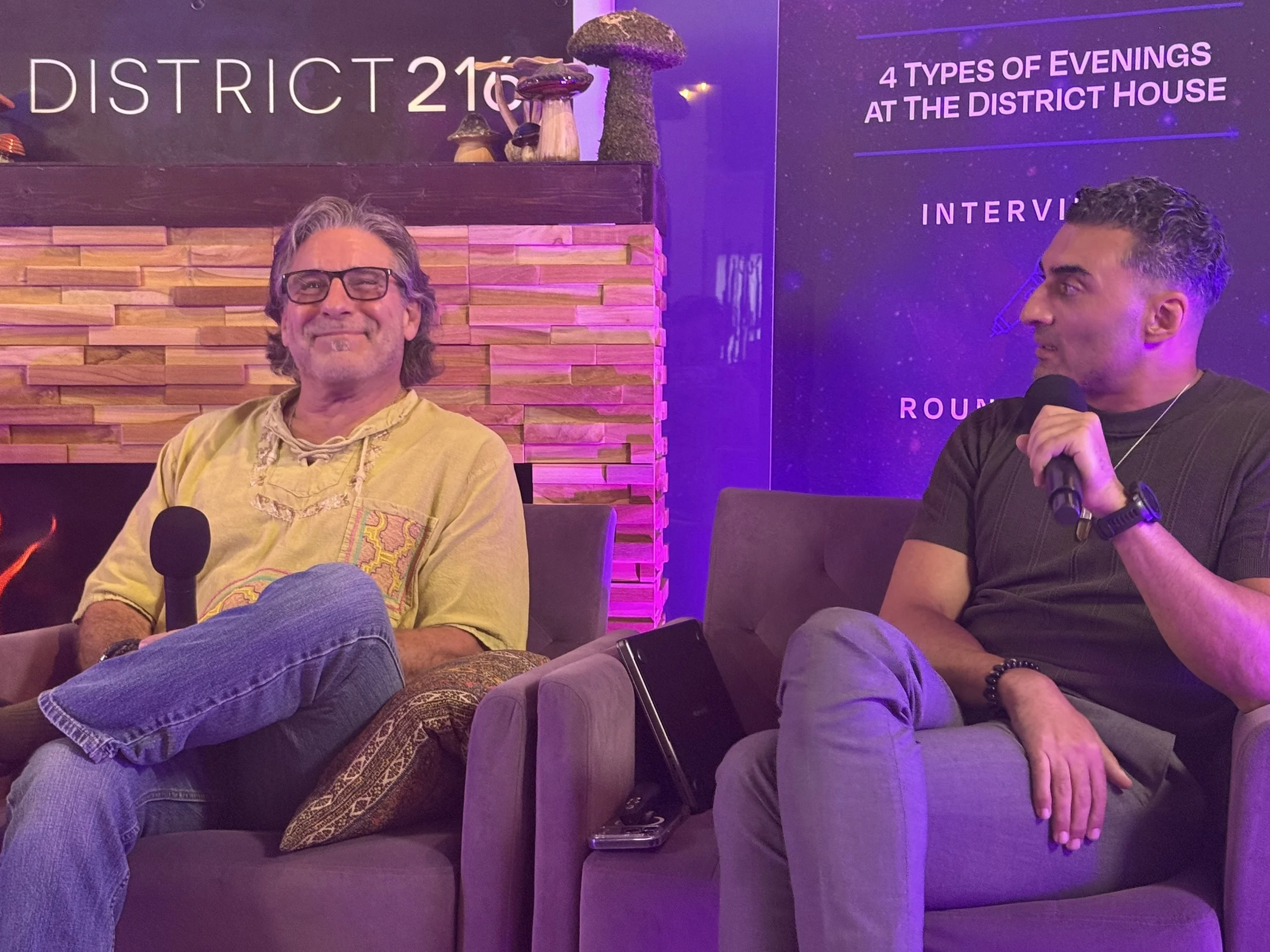
You could feel the crowd lean into that combination. It's uncommon to sit across from a physician who talks about synaptic repair in one breath and indigenous wisdom in the next without either one feeling like a footnote. Elyas doesn't set aside his medical training to make room for the shamanic. He holds both at once. And Michael doesn't dress up ancestral and depth-psychological work in clinical language to make it more palatable. He brings it in whole. That's the model. Not medicine versus mysticism, but medicine informed by both.
The neuroscience gave people a map: how ketamine can help dissolve rigid patterns and create the conditions for new connections to form, why that biological flexibility matters for people who've been stuck in grief, in trauma, in stories about themselves that stopped being true a long time ago. But Hannah Jo's interview is where the room moved from map to territory. She asked the questions that mattered. What does an altered state actually feel like? What happens in the body when the mind lets go of its usual grip? How do you come back from that and actually integrate it, instead of just having had an experience?
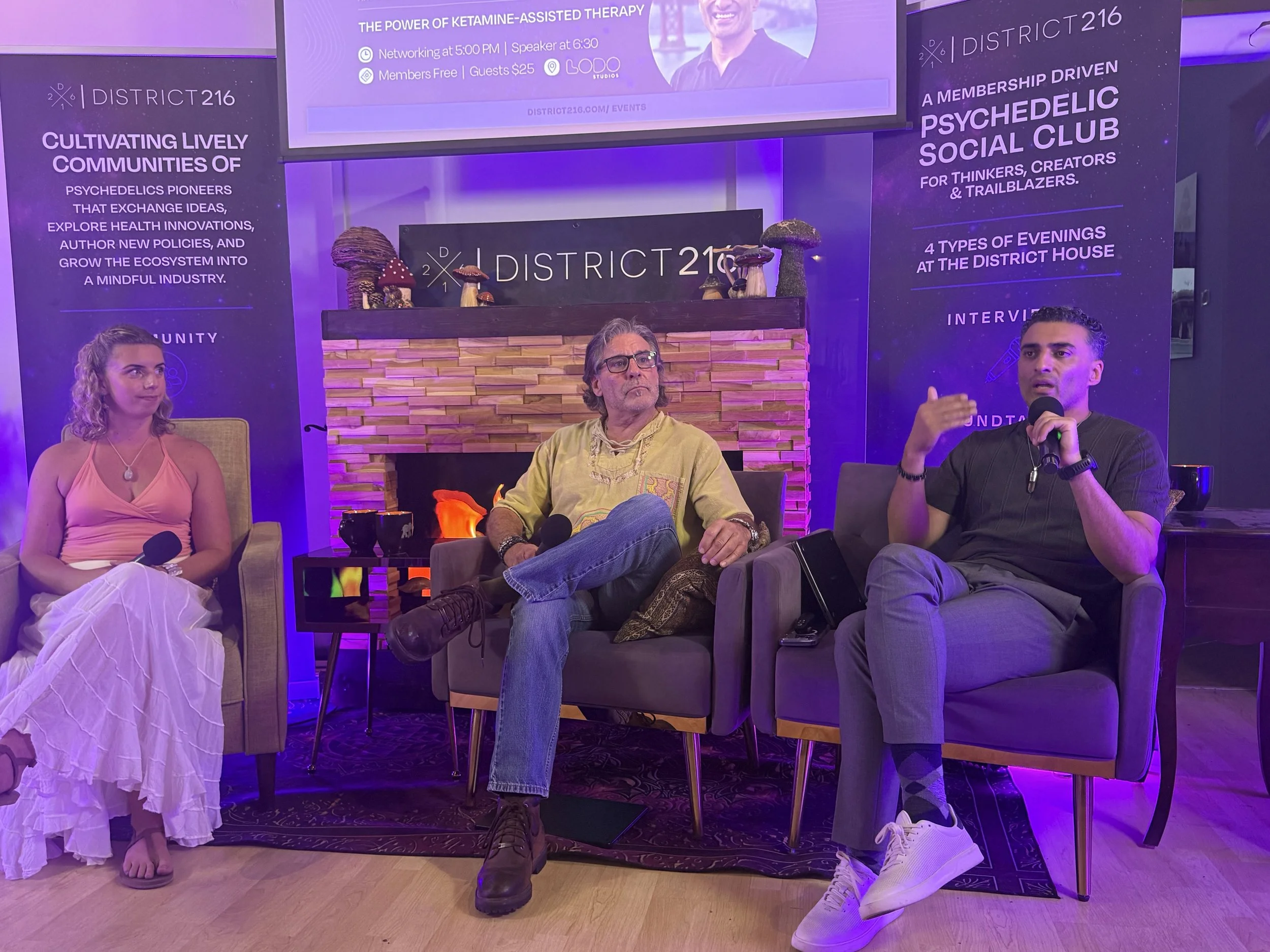
The audience Q&A that followed felt less like a formality and more like people had been waiting all night to ask what they really wanted to ask. Questions about grief, about long-held trauma, about what it means to trust a process you can't fully control. Michael and Elyas answered with the same steady duality that ran through the whole night: precise, candid, and unafraid of mystery.
This is exactly the kind of conversation District216 exists to hold. Not psychedelics as a trend or a hack, but as a genuine bridge between science and spirit, between the clinical and the ancestral, between what we can measure and what we can only feel. Michael and Elyas didn't just present a treatment model. They modeled something bigger: that respect for lineage and rigor for evidence aren't opposites. They're both required.
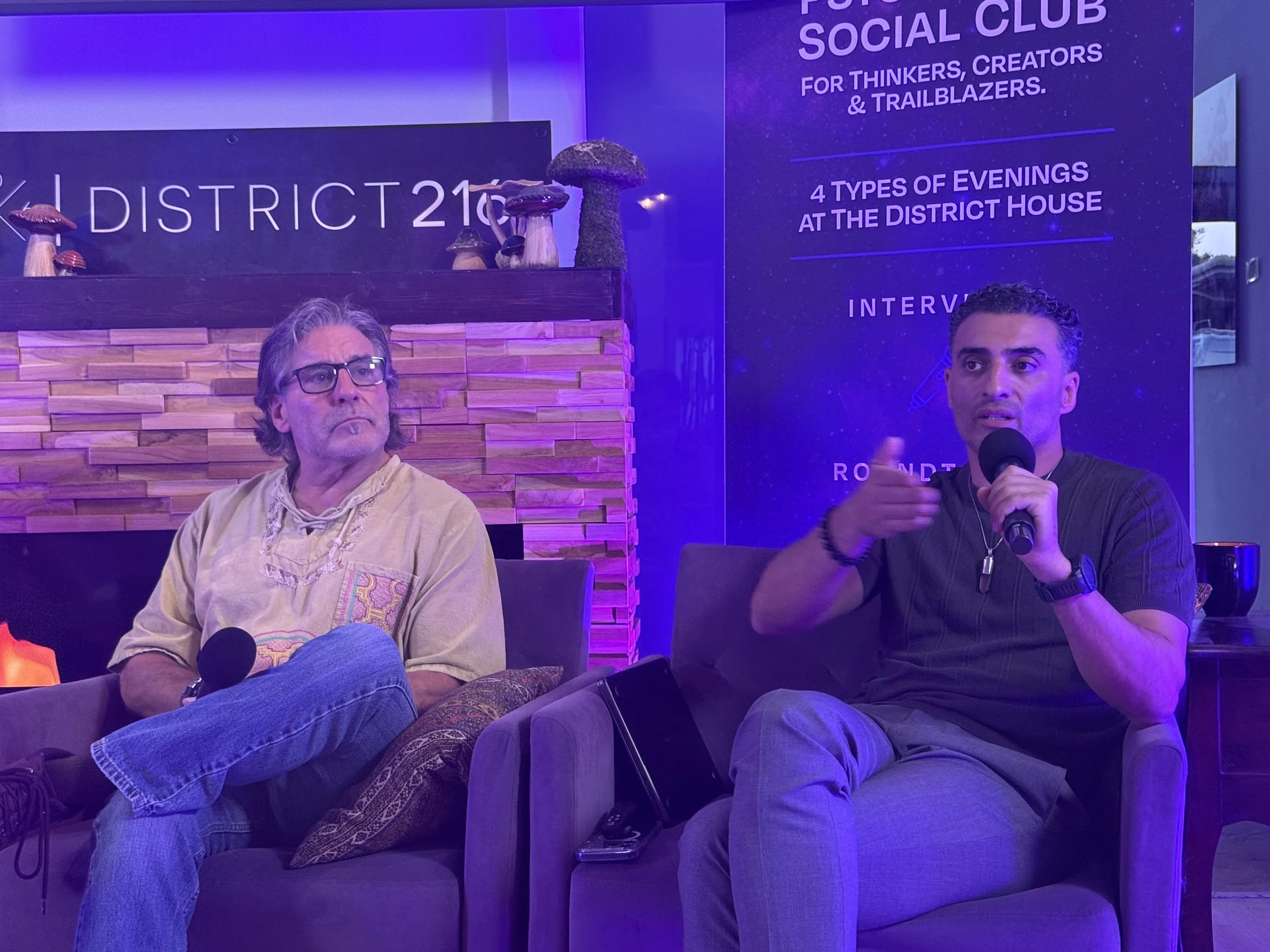
If you were in the room, you already know what a rare thing it is to watch two practitioners hold that much complexity with that much care. If you weren't, consider this your invitation. District216 keeps showing up for conversations like this one, where healing gets to be both a science and a ceremony, because that's the future we're building toward. Come find us at the next one.